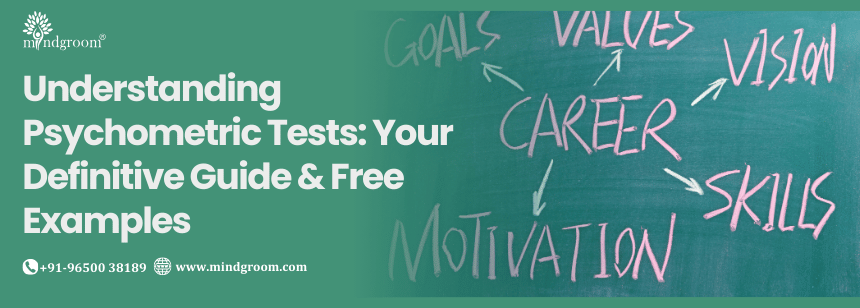
Understanding Psychometric Tests: Your Definitive Guide & Free Examples
The modern job market is a dynamic landscape, and securing your ideal role often involves more than just a polished resume and a compelling interview. Increasingly, employers are turning to sophisticated tools to gain deeper insights into a candidate's potential: psychometric tests. These assessments, once primarily used in clinical psychology, have become integral to recruitment processes worldwide. Understanding what psychometric tests are, why they are used, and how to approach them can provide a significant advantage, transforming a potential hurdle into an opportunity for self-discovery and career advancement. This guide offers a comprehensive look at the world of psychometric testing, demystifying its science, detailing its applications, and equipping you with the knowledge to navigate it successfully.
What Exactly Are Psychometric Tests? The Science of Measurement
At its core, psychometrics is the field of study concerned with the theory and technique of psychological measurement. It involves developing and validating instruments designed to measure mental capabilities and behavioral styles. In the context of employment, psychometric tests are scientific tools used by organizations to objectively assess individuals, providing insights into their cognitive abilities, personality traits, and behavioral tendencies that are relevant to job performance. The global psychometric tests market is substantial, projected to grow from approximately $6.5 billion in 2023 to around $12.5 billion by 2032, reflecting its growing importance in talent management [Dataintelo, 2025].
Defining Psychometric Tests: More Than Just a Quiz
Psychometric tests are not simply informal quizzes; they are standardized instruments designed to measure specific psychological attributes. Unlike subjective assessments, they rely on empirical data and statistical analysis to ensure their effectiveness. The purpose is to gain objective data about a candidate, providing a consistent benchmark against which all applicants can be compared. This scientific approach aims to reduce bias and improve the accuracy of hiring decisions, moving beyond gut feelings and subjective impressions.
Aptitude vs. Psychometric Tests: Understanding the Nuance
The terms "aptitude test" and "psychometric test" are often used interchangeably, but there's a subtle distinction. Psychometric testing is a broad umbrella term encompassing any standardized test used to measure psychological attributes. Aptitude tests are a specific subset of psychometric tests that focus on measuring an individual's potential to learn or acquire new skills. They assess inherent cognitive abilities, such as logical reasoning, numerical ability, and verbal comprehension, which are indicative of how well someone might perform in a particular role or learn new job functions. While all aptitude tests are psychometric tests, not all psychometric tests are solely aptitude tests; for instance, personality assessments fall under the broader psychometric umbrella but measure behavioral preferences rather than pure learning potential.
The Core Principles: Reliability and Validity
The scientific integrity of any psychometric test hinges on two fundamental principles: reliability and validity.
- Reliability refers to the consistency of a test. A reliable test will produce similar results if administered repeatedly to the same individual under similar conditions. This ensures that the scores are stable and not due to random chance. For example, if you take a reliable numerical reasoning test today and again next week, your scores should be broadly comparable, assuming no significant changes in your skills or external factors.
- Validity refers to the extent to which a test measures what it claims to measure and whether those measurements are useful for predicting job-relevant outcomes. A valid test accurately assesses the specific abilities or traits it's designed to assess. For instance, a personality test for a sales role should genuinely measure traits like assertiveness and resilience, and scores on this test should correlate with actual sales performance.
These principles ensure that psychometric testing is a robust and scientifically sound method for assessing individuals in the recruitment process.
Why Employers Use Psychometric Tests: Beyond the Resume
In today's competitive talent market, organizations are constantly seeking efficient and effective ways to identify the best candidates. Psychometric tests offer a data-driven approach that complements traditional hiring methods like resumes and interviews. The global psychometric tests market is projected to grow from USD 9.47 billion in 2023 to USD 30.12 billion by 2033, exhibiting a CAGR of 12.27%, underscoring their widespread adoption [Spherical Insights, 2024]. Their use extends across various stages of the recruitment process, aiming to improve the quality of hires, reduce costs, and foster a more engaged workforce.
Streamlining the Recruitment Process
Traditional recruitment can be time-consuming and resource-intensive. Psychometric tests, particularly at the early stages, help filter large applicant pools by objectively assessing core competencies. This allows hiring managers to focus their attention on candidates who demonstrate the necessary aptitude and personality traits for the role, thereby streamlining the entire hiring workflow. Organizations using psychometrics in their hiring processes have observed significant benefits, including a 30% reduction in employee turnover [Psicosmart, 2024].
Identifying Job and Company Culture Fit
Beyond technical skills, employers want to ensure that a new hire will integrate well into the existing team and align with the company's values and culture. Personality tests and situational judgment tests (SJTs) are particularly useful here. They provide insights into a candidate's preferred work style, how they interact with others, and their approach to problem-solving and challenging situations. This helps predict how well an individual might fit into the company culture and contribute positively to team dynamics.
Reducing Attrition and Enhancing Talent Management
High employee turnover is costly and disruptive. Psychometric testing can help mitigate this by improving the accuracy of hiring decisions. By identifying candidates whose personality traits and cognitive abilities are a strong match for the role and the organization's environment, companies can significantly reduce the likelihood of poor hires who may leave shortly after joining. Companies using psychometric assessments have seen a 24% increase in employee performance and a 50% reduction in turnover rates compared to those that don't [Psicosmart, 2025]. This focus on fit at the outset leads to a more stable and productive workforce.
Complementing the Interview Process
Interviews, while valuable, can be subjective and prone to biases. Psychometric tests offer objective data that can corroborate or challenge interview impressions. For instance, if a candidate appears confident in an interview but a personality test reveals a tendency towards introversion, this might prompt further exploration of their comfort with highly social roles. Conversely, strong performance on ability tests can validate interview discussions about a candidate's competence. This blended approach ensures a more comprehensive and fair evaluation of each candidate.
The Main Types of Psychometric Tests: Your Comprehensive Breakdown & Free Examples
Psychometric tests are diverse, each designed to measure different facets of an individual. Understanding these categories is crucial for both employers and candidates. The global psychometric tests market is estimated to reach $1,101.3 million by 2030, growing at a CAGR of 7.5% from 2023 [Metastat Insight, 2023].
Cognitive Ability Tests: Measuring Your Brainpower
These tests are designed to assess an individual's general mental capacity and aptitude for problem-solving and learning. They evaluate various cognitive abilities, which are fundamental to performing well in most roles.
- Numerical Reasoning Tests: These assess your ability to understand, interpret, and logically work with numerical data. You'll typically encounter charts, graphs, and tables, and be asked to perform calculations, identify trends, or solve problems using this information.
- Free Example Snippet: If a company's profit increased by 15% from Year 1 to Year 2, and then by 20% from Year 2 to Year 3, what was the approximate overall percentage increase in profit over the two-year period? (Answer requires calculation of sequential percentage increases).
- Verbal Reasoning Tests: These measure your ability to understand and analyze written information. You'll often be presented with passages of text and asked to determine if statements are true, false, or cannot be determined based on the provided information.
- Free Example Snippet: Passage: "The company launched its new product line in Q4, exceeding initial sales projections by 25%." Statement: "The new product line was not successful." (Answer: False).
- Logical/Abstract Reasoning Tests: These tests assess your ability to identify patterns, relationships, and logical connections between shapes, symbols, or concepts. They are excellent indicators of general intelligence and problem-solving skills.
- Free Example Snippet: A sequence of shapes: Square, Circle, Triangle, Square, Circle, ____. What comes next? (Answer: Triangle, following a repeating pattern).
These tests are collectively referred to as aptitude tests or ability tests and are vital for roles requiring critical thinking and analytical skills.
Personality Tests & Questionnaires: Understanding Your Behavioral Style
Unlike ability tests that measure "can do," personality tests assess "like to do." They explore an individual's inherent personality traits, preferences, and behavioral styles. These questionnaires typically consist of statements where candidates indicate their level of agreement. They help employers understand how an individual is likely to behave in different work situations, how they prefer to work, and how they might interact with colleagues. For example, traits like conscientiousness, agreeableness, and openness are commonly assessed.
Situational Judgement Tests (SJTs): How You Handle Workplace Scenarios
SJTs present you with realistic workplace scenarios and ask you to choose the most effective course of action from a list of options, or to rank the effectiveness of different responses. These tests assess your judgment, problem-solving skills, and understanding of appropriate workplace behavior. They are particularly useful for roles that require significant interpersonal skills or decision-making under pressure.
Emotional Intelligence (EI) Tests: Navigating Emotions at Work
Emotional intelligence is the ability to understand, use, and manage your own emotions in positive ways to relieve stress, communicate effectively, empathize with others, overcome challenges, and defuse conflict. EI tests assess these competencies, which are increasingly recognized as crucial for leadership, teamwork, and customer-facing roles.
Emerging Assessment Types: Game-Based & Video-Based Assessments
The field of psychometric testing is continually evolving. Game-based assessments use gamified elements to measure cognitive abilities and personality traits in a more engaging way, often disguising the assessment within gameplay. Video-based assessments might involve candidates responding to video prompts or having their responses to interview questions analyzed by AI. These newer formats aim to improve candidate experience and capture more nuanced data.
Preparing for Psychometric Tests: Strategies for Success
The prospect of taking psychometric tests can be daunting, but effective preparation can significantly boost your confidence and performance. Over 80% of respondents agree that using inclusive language in test instructions and questions can improve the overall test experience for individuals from diverse backgrounds [Psicosmart, 2024]. This highlights the importance of clear communication in the testing process.
Understand the Test Format and Requirements
Before you begin, familiarize yourself with the specific types of tests you will encounter. Are they timed? What is the scoring mechanism? Understanding the format—whether it's multiple-choice, scenario-based, or rating scales—is the first step to developing an effective strategy. Different ability tests like numerical reasoning and verbal reasoning require distinct approaches to problem-solving.
Practice, Practice, Practice (and Learn from Mistakes)
The best way to prepare for psychometric tests is through practice. Many online resources offer free practice tests for various types of aptitude tests and personality tests. When practicing, don't just aim for speed; focus on understanding the underlying logic and the principles behind the questions. Analyze your mistakes to identify areas where you need to improve. Learning from these errors is more valuable than simply repeating the same questions.
Develop Strategic Thinking for Each Test Type
Each type of test requires a tailored strategy. For numerical reasoning, practice quick calculations and data interpretation. For verbal reasoning, focus on carefully reading the passages and identifying keywords. For abstract reasoning, look for visual patterns and transformations. For personality tests, answer honestly based on your typical behavior, as faking responses can often be detected by the test's algorithms. SJTs require you to consider the potential consequences of each action and choose the most professional and effective response.
Manage Test Anxiety and Stress
It's natural to feel some anxiety before a test. However, excessive stress can impair performance. Practice relaxation techniques, ensure you get enough sleep before the test, and try to approach the assessment with a calm, focused mindset. Remember that these tests are designed to measure your abilities and traits, not to trick you. Viewing them as an opportunity to showcase your strengths can help reduce anxiety.
Specific Considerations for Diverse Candidates
For candidates requiring reasonable adjustments, it is essential to communicate these needs to the recruiting organization in advance. This might include extra time for tests, alternative formats, or assistive technology. Over 80% of respondents agree that using inclusive language in test instructions and questions can improve the overall test experience for individuals from diverse backgrounds [Psicosmart, 2024]. Employers are increasingly aware of these needs and are committed to making the assessment process fair and accessible for all.
Interpreting Your Psychometric Test Results: What Do They Mean?
Receiving your psychometric test results can be a moment of introspection. Understanding how these scores are generated and used provides valuable context for your career journey. The global psychometric tests market is projected to reach USD 5.9 Billion by 2031, growing at a CAGR of 11.8% from USD 2.4 Billion in 2023 [Market Research, 2023].
Understanding Your Score
Scores on psychometric tests are often presented in various ways, such as percentiles, standard scores, or trait descriptors. A percentile score, for example, indicates the percentage of people you scored higher than. It's important to understand what a particular score means in relation to the benchmark set for the role or the general population. For cognitive abilities, a higher score generally indicates stronger aptitude. For personality tests, there is no "right" or "wrong" score; rather, the results describe your typical behavioral tendencies.
How Employers Use the Data
Employers use psychometric test results to gain a more objective and comprehensive understanding of a candidate. They are typically used in conjunction with other selection methods, such as interviews and resume reviews, to make informed hiring decisions. Scores can help identify strengths and potential development areas, predict job performance, and assess cultural fit. Over 80% of Fortune 500 companies use psychometric testing as part of their recruitment process [Big 5 Assessments, 2023], demonstrating their widespread utility.
Self-Reflection and Career Development
Beyond the immediate recruitment context, your psychometric test results can be a powerful tool for self-awareness and career development. Understanding your dominant personality traits and cognitive abilities can help you identify roles and work environments where you are most likely to thrive. It can also highlight areas where you might benefit from further training or development. This self-knowledge is invaluable for making informed career choices and setting realistic professional goals.
The Future of Psychometric Testing: What's Next?
The landscape of talent assessment is constantly evolving, driven by technological advancements and a deeper understanding of human intelligence and behavior. Psychometric testing is at the forefront of this evolution.
Advancements in Technology
Technology is revolutionizing how psychometric assessments are developed and delivered. Artificial intelligence (AI) is increasingly being integrated, from creating adaptive tests that adjust difficulty based on candidate performance to analyzing video interviews. AI interviews, for instance, have shown promising results, leading to 12% more job offers, 18% more job starters, and 16% higher retention rates after 30 days of employment [HackerEarth, 2024]. Cloud-based platforms are also making assessments more accessible and efficient to administer and analyze.
Evolving Assessment Methods
The trend is moving towards more dynamic and engaging assessment methods. Beyond traditional tests, we're seeing a rise in game-based and simulation-based assessments that provide a more immersive and realistic evaluation of skills and behaviors. These methods aim to capture a broader range of competencies and offer a more predictive insight into candidate performance, making the assessment process both more effective and more enjoyable for the candidate.
Conclusion
Psychometric tests are a sophisticated and increasingly vital component of modern recruitment and talent management. They provide an objective, data-driven approach to understanding individual differences, offering invaluable insights into a candidate's cognitive abilities, personality traits, and behavioral styles. By demystifying the science behind Psychometrics, understanding the various types of tests, and preparing effectively, you can transform these assessments from potential obstacles into powerful tools for self-discovery and career advancement. Embracing psychometric testing, both as an employer seeking the best talent and as a candidate seeking the right fit, leads to more informed decisions, reduced attrition, enhanced performance, and ultimately, more successful and fulfilling career journeys.
Frequently Asked Question’s (FAQ’s)
A psychometric test is a scientific assessment used to measure a person’s abilities, personality, aptitude, behavior, and intelligence.
Psychometric assessments are used for career guidance, recruitment, student evaluation, and psychological analysis.
Common types include aptitude tests, personality tests, intelligence tests, behavioral tests, and career psychometric tests.
Yes, when conducted by certified professionals, psychometric tests are reliable, standardized, and scientifically validated.
Yes, many platforms offer online psychometric tests for career counseling, hiring, and self-assessment.
Looking For Job Satisfaction on the long run?
Please feel free to contact our experts
Call to ask any question
+91-9319336222Monday to Saturday
(9:00 AM to 8:00 PM)Resent Blogs

10 Things to Do During an Interview to Impress Your Future Employer
Learn More
Crafting Your Personal Narrative: A Guide to Writing About Yourself
Learn More
Top 10 Essential Interview Questions and Expert Answers for 2025
Learn More
Ace Your Next Interview: Essential Questions and Expert Answers for 2025
Learn More
First-Time Manager Interview: Crucial Questions and Strategies for Success
Learn More
150 Essential General Knowledge Questions for Interviews in 2025
Learn More
Master the Google Interview: Strategies for Success in 2025
Learn More
How Can You Describe Yourself Professionally? 5 Key Strategies You Need to Know
Learn More
Mastering the Art of How to Take Interview: Essential Techniques for Success
Learn More
25 Essential HR Interview Questions and Answers PDF You Can't Ignore
Learn More
7 Tips to Ace Your HR Screening Round and Land Your Dream Job
Learn More
10 Essential Tips for Acing Your Interview Exam
Learn More
5 Unique Interview Format Examples to Stand Out in Your Next Interview
Learn More
5 Powerful Techniques for a Memorable Interview Introduction
Learn More
Master Your Next Interview with These Top Interview Preparation Apps
Learn More
Mastering the Art: Top Interview Questions for 12th Class Students
Learn More
7 Must-Know Interview Questions for Freshers to Ace Your Job Hunt
Learn More
Mastering Interview Questions for HR Position with Answers: Strategies for Success
Learn More
12 Essential Interview Questions for Recruiter Position You Should Prepare For
Learn More
10 Must-Know Interview Questions UK Employers Love to Ask
Learn More
10 Creative Interview Writing Examples to Spark Your Imagination
Learn More
15 Essential Managerial Interview Questions for Freshers to Prepare
Learn More
15 Unique Marketing Interview Questions You Haven't Prepared For
Learn More
7 Key Strategies for a Successful Mock Interview Session
Learn More
The Ultimate Guide to Model Interview Questions: What You Need to Know
Learn More
5 My Self Question Exercises to Unlock Your True Potential
Learn More
10 Normal Questions That Can Spark Deep Conversations
Learn More
15 Essential Personal Interview Questions for Freshers to Ace Your Next Job
Learn More
10 Essential Phone Interview Questions You Can’t Afford to Ignore
Learn More
15 Essential Sales Interview Questions and Answers for Freshers
Learn More
7 Key Situational Interview Questions Every Employer Should Ask
Learn More
15 Essential Software Developer HR Interview Questions You Need to Prepare For
Learn More
Mastering the Technical Interview: Essential Questions and Answers
Learn More
Top Strategies for Responding to Tell Me About Yourself in a Student Interview
Learn More
Top 10 Interview Questions and Expert Answers
Learn More
Mastering the Art of Interviewing: 50 Tough Questions and Smart Answers
Learn More
How to Ace Your Next Mock Interview: Tips and Strategies for Success
Learn More
Your Ultimate Guide: 60 Insightful Questions to Ask Interviewers
Learn More
Crafting the Perfect Response to Why Do You Want This Job?
Learn More
Unique Ways to Tackle the Question Why Should We Hire You?
Learn More
Why Should We Hire You? - Top 10 Answers for Customer Service Roles
Learn More
Mastering the Art of Discussing Work Experience in Interviews
Learn More
Mastering Your Sales Interview: 50 Essential Questions and Answers
Learn More
Career Paths After 12th Commerce: Your Future Starts Here
Learn More
Explore One-Year Courses After 12th for Non-Medical Students
Learn More
Quick Career Paths: 2-Year Degree Courses After 12th for Fast-Track Success
Learn More
Comprehensive Guide: Courses After 12th Commerce
Learn More
Top 10 Lucrative Courses to Consider After Completing Engineering
Learn More
Advancing Your Career: Top Choices After B.Tech in 2025
Learn More
Explore Your Future: After CET Exam Which Course is Best for Aspiring Professionals?
Learn More
5 Reasons Why After Inter CEC, Choosing the Right Course is Crucial
Learn More
After PUC Which Course is Best for Aspiring Engineers? Explore Your Options!
Learn More
Unlocking Your Future: Best Arts and Science Courses After 12th for 2025
Learn More
Why a Bachelor Degree in Commerce is Your Pathway to Success
Learn More
15 Best Career Courses to Boost Your Earning Potential in 2025
Learn More
Emerging Career Fields for 2025: What You Need to Know
Learn More
Exploring In-Demand Career Paths After 12th: Science, Arts, Commerce
Learn More
15 Lucrative Science Careers You Should Consider
Learn More
High-Paying Career Paths for Girls After 12th Commerce
Learn More
Top 10 High Salary Career Courses After 12th Biology
Learn More
Top 10 High-Paying BSc Specializations for 2025
Learn More
Exploring the Future: Innovative Career Paths for B.Tech Graduates in 2025
Learn More
Comprehensive Guide to B.Tech Specializations for MPC Graduates
Learn More
Unlocking Your Potential: The Ultimate B Tech Job List for 2025
Learn More
B.Tech Salary Insights: How Much Can You Earn Per Month?
Learn More
Essential Business Courses After 12th: Your Guide to a Successful Career
Learn More
How Commerce Students Can Transition to BSc IT
Learn More
Exploring Career Paths After 12th: Your Guide to Success in 2025
Learn More
Certainly! Here are 10 additional title ideas inspired by the list you provided
Learn More
Exploring Career Paths After Engineering: Your Guide to the Future
Learn More
The Ultimate Guide to Career Options Post-High School Graduation
Learn More
Discover the Top 10 Chemistry Courses After 12th That Lead to High-Paying Jobs
Learn More
Explore the Best Diploma and Certificate Programs After 12th Commerce
Learn More
Career Paths for Computer Science Graduates: Top Opportunities to Explore
Learn More
Explore Top Courses After 12th: Your Path in Science, Arts, or Commerce
Learn More
Top 10 Courses After 12th Commerce for a Successful Career
Learn More
Top Paying Professional Courses After 12th for Commerce Students
Learn More
Emerging Career Paths After 12th Commerce Without Maths
Learn More
Exploring Career Paths After 12th Science: A Complete Guide
Learn More
Comprehensive Guide to Courses and Career Paths after 12th Grade
Learn More
Emerging Career Paths in India: What to Expect in 2025
Learn More
Top Diploma Paths for Students After Completing 12th Science
Learn More
Top 15 Easiest High-Paying Jobs to Pursue in India by 2025
Learn More
Navigating Your Future: Easy Degree Options After 12th
Learn More
Exploring Top Engineering Branches After 12th: A Comprehensive Guide
Learn More
Exploring Advanced Studies: Top Entrance Exams for Engineering Graduates
Learn More
MBA Salary Insights: Top Packages and Compensation Trends in India
Learn More
Top 15 Lucrative Careers in India for 2025
Learn More
Top 10 High-Paying Jobs for Commerce Graduates Without Maths
Learn More
Top 10 High Salary Courses After 12th PCB for Future Success
Learn More
High-Earning Courses to Pursue After 12th Science in 2025
Learn More
High Paying Career Paths for BiPC Students: Top 10 Courses to Consider
Learn More
Exploring High-Paying Engineering Degrees for the Future
Learn More
Exploring Integrated Courses After 12th: A Comprehensive Guide for Students
Learn More
Exploring Career Prospects: What Can You Do with a BBA Degree?
Learn More
Top 15 In-Demand Professional Courses for Commerce Graduates in 2025
Learn More
Exploring Lucrative Job Paths for BBA Graduates in 2025
Learn More
MBA Full Form Explained: Master of Business Administration & Its Strategic Career Value
Learn More
BBA Full Form: The Definitive Guide to BBA Degrees, Admissions, & Career Paths
Learn More
BCA Full Form Explained: Your Complete Guide to the Degree, Admission & Career Scope
Learn More
IAS Full Form: Indian Administrative Service Explained & Its Pivotal Role
Learn More
MBBS Full Form: Unraveling the Meaning Behind a Doctors Qualification
Learn More
UPSC Full Form: Union Public Service Commission and Its Vital Role
Learn More
BSc Full Form: Bachelor of Science & What It Means for Your Future
Learn More
ITI Full Form: What Exactly is Industrial Training Institute?
Learn More
LLB Full Form: Your Ultimate Guide to Bachelor of Laws, Eligibility & Career Scope
Learn More
Is There a True Computer Full Form? Unpacking the Popular Acronym
Learn More
B.Tech Full Form Unpacked: Meaning, Scope, and Why It Matters for Your Career
Learn More
IIT Full Form: Unveiling the Indian Institute of Technology and Its Legacy
Learn More
MCA Full Form Revealed: Master of Computer Applications & Its Significance
Learn More
IIT Full Form: Indian Institute of Technology – Understanding Its Legacy, Campuses, and Global Standing
Learn More
Your Complete Guide to Becoming a Veterinarian: Education, Specialties & Career Paths
Learn More
BSc Degree: Your Complete Guide to Courses, Careers, and Future Prospects
Learn More
B.Com Full Form Unveiled: What Bachelor of Commerce Truly Means
Learn More
BAMS Full Form: Bachelor of Ayurvedic Medicine and Surgery — Unpacking Its Meaning & Career Scope
Learn More
What is a Polytechnic? Your Complete Guide to Courses, Admissions & Career Paths
Learn More
SSC GD Constable Exam News 2025-26: Latest Updates on Vacancies, Dates & Application
Learn More
How to Choose the Best Veterinarian for Your Pet: A Comprehensive Guide
Learn More
Air Hostess 2026: Your Complete Roadmap to Landing the Dream Job
Learn More_Thumbnail_.png )
Unlocking Your Future: The Ultimate BSc Degree Guide (Courses, Careers & Admissions)
Learn More_Thumbnail_.png )
CMA Full Form: Certified Management Accountant (Global Standard Explained)
Learn More
NACH Full Form Explained: What It Is & Why It Matters in Banking
Learn More
The Modern Anthropologist: Understanding Their Role, Impact, and Diverse Specializations
Learn More
BBA: Your Ultimate Guide to Course Details, Admission, Fees, and Future Career Prospects
Learn More
BDS Full Form Unpacked: Your Essential Guide to Dentistry Courses, Admissions & Career Scope
Learn More
BHMS Full Form Revealed: Your Complete Guide to Bachelor of Homeopathic Medicine & Surgery
Learn More
B.Tech Admissions 2026: Your Complete Guide to Courses & Eligibility
Learn More
CFA Full Form: Understanding the Chartered Financial Analyst Designation
Learn More
Merchant Navy Salary in India: Unveiling Pay Scales by Rank & Experience
Learn More
TS EAMCET 2026: Official Notification, Exam Dates & Application Guide
Learn More
VITEEE 2026: Full Guide to Application, Dates, Syllabus & Preparation
Learn More
BMS Full Form: Unveiling Bachelor of Management Studies & What it Entails
Learn More
B.Sc. Computer Science: Your Complete Guide to Courses, Careers & Eligibility
Learn More
Computer Science Explained: From Basics to Advanced Concepts
Learn More
Worlds Most Difficult Exams: A Definitive Ranking for 2025
Learn More_All_You_Need_to_Know_Thumbnail_.png )
Union Public Service Commission (UPSC): All You Need to Know
Learn More
BE Full Form Explained: What Bachelor of Engineering Means & Your Career Path
Learn More
DMIT Full Form Revealed: Unpacking the Dermatoglyphic Multiple Intelligence Test
Learn More
Indias Most Difficult Exams: The Ultimate Ranking for 2025
Learn More
CLAT Full Form: Unveiling the Common Law Admission Test + Key Details
Learn More
Highest Paying Jobs in India: Unveiling the Top 25 Roles & Their Lucrative Salaries
Learn More
MA Full Form: Unpacking the Master of Arts Degree & What It Entails
Learn More
Marketing Management Explained: Core Concepts & Strategic Implementation
Learn More
BCA Course Subjects: A Comprehensive Guide to Your IT Degree Curriculum
Learn More
CAT Exam Date 2026: When to Apply & Exam Schedule Revealed
Learn More
CDS Full Form: Unveiling Combined Defence Services & Your Path to Commission
Learn More
Lab Technician Career Path: Duties, Skills, and Salary Guide
Learn More
Your Complete Guide to Becoming a Successful Software Developer
Learn More
Air Hostess Course Guide: Everything You Need to Know for Your Aviation Career
Learn More
Introduction: Navigating Your Path to Medical Excellence in India
Learn More
Top Commerce Courses After 12th: Unlock Lucrative Career Paths
Learn More
Top Industrial Training Institutes: Your Guide to Skilled Trades
Learn More
Understanding Psychometric Tests: Your Definitive Guide & Free Examples
Learn More
What Does a Surgeon Do? A Comprehensive Guide to the Profession
Learn More
UG Explained: Your Ultimate Guide to Undergraduate Degrees & Admissions
Learn More
10th Pass Govt Jobs 2026: Your Complete Guide to Apply & Secure Your Career
Learn More
ATMA: Your Complete Guide to the Management Admissions Test
Learn More
BHMS Course Guide: Eligibility, Syllabus, Career Prospects & Top Colleges
Learn More
Unlock Your Future: The Definitive Guide to Career Counselling
Learn More
What Does a Clinical Psychologist Do? Your Comprehensive Guide
Learn More_Thumbnail_.png )
M.Tech Full Form: Master of Technology Explained (Meaning, Scope & Benefits)
Learn More
Radiology Courses Explained: From Certificates to Masters Degrees
Learn More
BSc Courses Explained: Full Guide to Specializations, Admissions & Career Paths
Learn More
BSc Nursing Course: Admission Guide, Eligibility, Syllabus & Career Paths
Learn More
BA LLB Full Form Explained: Unpacking Bachelor of Arts & Bachelor of Laws
Learn More
Top BBA Colleges in India: Unveiling the Elite Institutions for Your Management Degree
Learn More
UPSC CDS Exam Date 2026: Complete Schedule & Notification Details
Learn More
Top Career-Focused Courses After 12th Grade: Unlock Your Future
Learn More
Explore the World of Humanities Subjects: A Comprehensive Guide
Learn More
IPU CET 2026: Complete Guide to Applications, Syllabus & Cutoffs
Learn More
ISI Full Form: Unveiling the Meaning & Importance of the Indian Standards Institute
Learn More
JEE Advanced 2026 Exam Date: When Will the Exam Be Held?
Learn More
JEE Main 2026 Result Date: When to Expect Session 1 & 2 Results
Learn More
MCA Course Guide: Everything You Need to Know About Eligibility, Fees, and Admissions
Learn More
Multimedia Explained: Your Complete Guide to Definition, Examples, and Impact
Learn More
The Ultimate Paramedical Courses List: Find Your Perfect Career Path
Learn More
Pharm.D. Program: Your Complete Guide to Curriculum, Admissions & Outcomes
Learn More
The Ultimate Guide to Top IIT Colleges in India: Ranking, Admissions, and Courses
Learn More
ATC Full Form: Unpacking Air Traffic Control, Anatomy & More
Learn More
B.Ed. Course Duration in India: Everything Aspiring Teachers Need to Know
Learn More
B.Sc Psychology Degree: Your Guide to Admissions, Curriculum & Career Paths
Learn More
B.Tech Computer Science: Your Complete Guide to Admission, Syllabus & Career Prospects
Learn More
BDS Course Duration: How Long is Bachelor of Dental Surgery?
Learn More
BFA Full Form Explained: What is a Bachelor of Fine Arts & Why it Matters
Learn More
Biology Explained: What It Is, Its Core Concepts & Why It Matters
Learn More
BPT Course: Your Complete Guide to Bachelor of Physiotherapy Admissions
Learn More
BSc Nursing Full Form: What it Means and Why it Matters
Learn More
The Science Complete Guide: Best Courses & Career Paths Revealed
Learn More
Master Your Future: Your Complete Guide to 2026 Government Exams & How to Prepare
Learn More
MPhil Explained: Your Complete Guide to the Master of Philosophy
Learn More
Become a Certified Stenographer: Your Complete Course Guide
Learn More
TANCET 2026: Complete Exam Guide - Dates, Syllabus, and Preparation Tips
Learn More
Upcoming Government Exams 2026: Full Schedule, Eligibility & Application Dates
Learn More
What is CA? The Complete Guide to Chartered Accountancy and Your Career Path
Learn More
Agnipath Scheme Explained: Eligibility, Benefits, Salary & Career Path
Learn More
AFCAT 2026: Your Complete Guide to the Air Force Common Admission Test
Learn More
B Pharm Course Duration: How Long Does it Really Take to Get Your Pharmacy Degree?
Learn More
Top Commerce Colleges in India: Your Ultimate Ranking & Admission Guide
Learn More
Top Arts Courses After 12th: Unlock Your Creative & Professional Future
Learn More
Diploma in Mechanical Engineering: Your Path to a Rewarding Career
Learn More_Thumbnail_.png )
Unlock Your Future: Top High-Paying Courses After 12th Science (PCM & PCB)
Learn More_Officer_Salary_In-depth_Breakdown_Perks_Thumbnail_.png )
Indian Foreign Service (IFS) Officer Salary: In-depth Breakdown & Perks
Learn More
M.Ed. Full Form: What Master of Education Means & Why It Matters
Learn More
Understanding India's Paramilitary Forces: Roles, Responsibilities, and Key Units
Learn More
RBI Assistant 2026: Full Details on Notification, Vacancies & Application Process
Learn More
Relationship Manager Salary, Duties, and Career Path Explained
Learn More
Unlocking Your Science Journey: A Complete Guide to Science Subjects
Learn More
Unlock Your Career: The Ultimate Guide to Vocational Courses and Training Programs
Learn More
Top Courses After 10th Grade: Your Guide to Future Careers & Salaries
Learn More
MP Police ASI Recruitment: Latest Notification, Eligibility & Application Guide
Learn More
B.Arch Admissions: Your Complete Guide to Eligibility, Exams & Top Colleges
Learn More
B.Com Honours Degree: Your Complete Guide to Admission & Career Prospects
Learn More
BA Psychology Degree: Your Guide to Programs, Careers & Admissions
Learn More
BBS Full Form Explained: Bachelor of Business Studies - Your Career Guide
Learn More
Biotech Engineering: Your Guide to Innovation in Life Sciences
Learn More
BPA Full Form: Unpacking Bisphenol A and Its Impact
Learn More
BSW Full Form: What Bachelor of Social Work Means and Why It Matters
Learn More
BVSc Full Form Explained: What Does Bachelor of Veterinary Science Mean?
Learn More
Become a Customs Officer: Your Complete Career Guide
Learn More
DCH Full Form in Medical: Understanding the Diploma in Child Health
Learn More
Top Diploma Courses After 10th: Your 2026 Career Guide
Learn More
Unlock Your Tech Career: The Ultimate Guide to a Diploma in Computer Science
Learn More
Your Step-by-Step Guide: How to Become a Software Engineer
Learn More
Indian Forest Service Salary: Unveiling the Full Pay Scale & Perks for IFS Officers
Learn More
JEECUP Admit Card 2026: Download Hall Ticket & Exam Day Guide
Learn More
Your Guide to Junior Colleges: Admissions, Programs & Best Choices
Learn More
Lateral Entry Admissions: Your Complete Guide to Second Year College Admissions
Learn More
Introduction: Elevating Your Pharmacy Career with a Master's Degree
Learn More
Introduction: Why the Master of Science is the Engine of the Modern Economy
Learn More
Introduction: The Journey to Becoming a Physician
Learn More
The Evolution of Network Engineering: Defining the 2026 Landscape
Learn More
Connet Us
Unlock Your Dream Career Potential - Get Expert Advice From Our Counselling Experts


