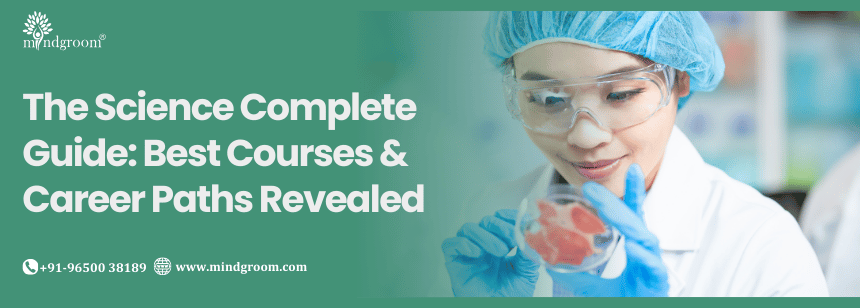
The Science Complete Guide: Best Courses & Career Paths Revealed
Introduction: Unlocking Your Future After 12th Science
The completion of 12th grade is a significant milestone, especially for students who have pursued the science stream. This foundational period equips students with critical thinking, analytical skills, and a deep understanding of the natural world, opening doors to a vast spectrum of opportunities. The decision of what to pursue next can feel daunting, given the sheer breadth of choices available. From established professional degrees to cutting-edge interdisciplinary fields, the landscape is dynamic and full of potential. The BLS projects a 7.4% increase in employment across life, physical, and social science occupations this year, matching the average growth rate across all sectors, highlighting the consistent demand for science professionals. This guide aims to demystify the post-12th science journey, offering a comprehensive roadmap to navigate the best courses and career paths available, empowering students to make informed decisions about their future.
The Pivotal Decision: Navigating Choices After High School

The science stream in 12th grade serves as a launchpad for a wide array of specialized career paths, depending on your subject combination.
Choosing a career path after 12th grade is one of the most crucial decisions a student will make. It influences not only their professional life but also their personal growth and impact on society. The science stream, with its rigorous curriculum encompassing physics, chemistry, and biology or mathematics, prepares students for fields that are fundamental to innovation and societal progress. This stage demands introspection, research, and a clear understanding of one's aspirations, strengths, and aptitudes. This guide serves as a compass, illuminating the myriad avenues available and providing the clarity needed to embark on a fulfilling career journey.
Why a Science Foundation is Your Strategic Advantage
A foundation in science is more than just academic preparation; it is the cultivation of a powerful mindset. The inherent curiosity that drives scientific inquiry, coupled with the analytical rigor required to dissect complex problems, forms the bedrock of innovation. Whether delving into the intricacies of biology, the fundamental laws of physics, or the logic of chemistry, students develop a systematic approach to understanding and interacting with the world. This scientific mindset is a transferable asset, highly valued across all industries, making a science background a strategic advantage in an ever-evolving job market.
What This Guide Will Offer You: A Comprehensive & Actionable Roadmap
This guide is designed to be your definitive resource for understanding the career landscape following 12th science. We will meticulously explore the various subject combinations, delve into traditional and emerging career paths, and highlight how science skills can be leveraged in diverse domains. Beyond listing options, we will provide insights into navigating entrance exams, understanding salary expectations, and making strategic choices that align with your personal and professional goals. Our aim is to offer an actionable roadmap, empowering you to confidently chart your course towards a successful and impactful career.
The Power of 12th Science: Building a Foundation for Innovation
The 12th-grade science curriculum is meticulously designed to foster a unique set of cognitive abilities. It moves beyond rote memorization, demanding a deeper engagement with concepts and their practical applications. This educational journey instills a way of thinking that is instrumental for success in a wide array of fields.
Cultivating Critical Thinking and Problem-Solving Skills
At its core, science education is about learning to think. Subjects like physics and chemistry require students to apply theoretical knowledge to solve practical problems, often involving complex calculations and logical deduction. Biology, with its intricate systems and evolutionary processes, fosters an understanding of interconnectedness and analytical reasoning. These disciplines inherently train students to approach challenges methodically, break them down into manageable components, and devise innovative solutions. This ability to critically evaluate information and develop robust problem-solving strategies is a cornerstone of success in any career.
The Broad Scope of Opportunities: More Than Just Engineering or Medicine
While engineering and medicine have long been the quintessential career paths for science students, the reality is far more expansive. The skills acquired through a science education are increasingly sought after in fields as diverse as technology, finance, environmental management, and even creative industries. Fields like Data Science are rapidly growing, demanding strong analytical and quantitative skills. The ability to understand complex data, identify patterns, and draw meaningful conclusions is a direct output of a science-focused education. Recognizing this breadth is key to unlocking a wider array of fulfilling career opportunities.
Understanding the Scientific Mindset: Curiosity, Analysis, and Discovery
The true power of a science education lies in cultivating the scientific mindset. This involves an insatiable curiosity about how things work, a disciplined approach to analysis, and a drive for discovery. It’s about asking “why†and “how,†and then systematically seeking answers through observation, experimentation, and critical evaluation. This mindset encourages continuous learning and adaptation, essential qualities in today's rapidly changing world. Whether pursuing pure research or applying scientific principles in a commercial setting, this innate curiosity and analytical rigor are invaluable assets that pave the way for groundbreaking contributions.
Navigating Your Science Stream: PCM, PCB, PCMB & Beyond
The choice of subject combination in 12th grade significantly shapes the initial career trajectories available to students. Understanding the core subjects and their associated pathways is fundamental to making informed decisions.
Core Subject Combinations and Their Initial Pathways
The most common streams in 12th science are PCM (Physics, Chemistry, Mathematics), PCB (Physics, Chemistry, Biology), and PCMB (Physics, Chemistry, Mathematics, Biology). Each combination offers a distinct set of foundational knowledge and opens up specific sets of courses and career paths.
PCM (Physics, Chemistry, Mathematics): Engineering, Technology, & Analytical Fields
Students opting for PCM typically set their sights on fields that heavily rely on mathematical principles and logical reasoning. This combination is the traditional gateway to engineering disciplines, such as Mechanical Engineering and Electrical Engineering, as well as technology and computer science programs. Beyond core engineering, PCM graduates are well-suited for courses in architecture, applied physics, and various analytical roles that require strong quantitative skills, including certain areas of Data Science. The emphasis on problem-solving and abstract thinking makes PCM students highly adaptable to industries driven by innovation and technical expertise.
PCB (Physics, Chemistry, Biology): Medicine, Healthcare, & Life Sciences
The PCB stream is the direct pathway for students aspiring to careers in medicine and the broader healthcare sector. This combination provides a comprehensive understanding of biological systems and their chemical underpinnings, essential for professions like MBBS doctors, dentists, pharmacists, and allied health professionals. Nursing is another significant career path within this stream, focusing on patient care and medical support. Beyond clinical practice, PCB graduates can pursue courses in life sciences research, biotechnology, and Environmental Science, exploring the intricate mechanisms of living organisms and ecosystems.
PCMB and Other Combinations: The Best of Both Worlds and Flexibility
The PCMB combination offers the broadest foundational knowledge, encompassing physics, chemistry, biology, and mathematics. This interdisciplinary approach equips students with a unique advantage, allowing them to explore career paths that bridge different scientific domains. For instance, a PCMB student can choose to pursue engineering and later specialize in biomedical engineering, or enter medicine with a stronger grasp of the mathematical principles underpinning physiological processes. This flexibility is increasingly valuable in emerging fields that require a multidisciplinary understanding, such as Data Science in healthcare or Environmental Science with a focus on ecological modeling.
Self-Assessment: Aligning Your Interests, Strengths, and Aptitude with Career Paths
Choosing the right course or career path requires a deep understanding of oneself. For students, this involves honest self-assessment. Reflect on which subjects you genuinely enjoy and excel in. Are you drawn to the analytical rigor of mathematics and physics, the problem-solving nature of engineering, the compassionate caregiving required in medicine and healthcare, or the intricate workings of life as studied in biology? Consider your inherent strengths and aptitudes. Do you possess strong logical reasoning, exceptional communication skills, a meticulous attention to detail, or a creative flair? Aligning these personal attributes with the demands and opportunities of various career paths is crucial for long-term satisfaction and success.
Traditional & High-Demand Career Paths After 12th Science
The science stream has traditionally opened doors to highly respected and in-demand professions that are fundamental to societal advancement and well-being.
Engineering & Technology: Innovating the Future
The field of engineering is a cornerstone of innovation, driving progress across virtually every sector. Mechanical and Electrical Engineers, for instance, are pivotal in designing, developing, and maintaining the machinery, systems, and infrastructure that power our world. From renewable energy solutions to advanced robotics, their contributions are indispensable. The median annual wage for STEM occupations in 2024 is $95,000, significantly higher than the median wage for all occupations at $45,000 source text. Engineering majors are expected to be the Class of 2024's top-paid graduates, with a projected average salary of $76,736, representing a 3.1% increase over last year's projections source text. The demand for skilled engineers remains consistently high, with the U.S. needing to fill about 3.5 million STEM jobs by 2025, though an estimated 2 million may remain unfilled due to a skills gap source text. Courses like Computer Science Engineering and Information Technology are central to the digital revolution, creating the software, hardware, and networks that underpin modern life.
Medical & Healthcare Sciences: Healing and Wellness for Humanity
The medical and healthcare professions are dedicated to preserving and improving human health. Pursuing an MBBS degree leads to a career as a physician, offering a profound opportunity to diagnose, treat, and manage illnesses. Nursing is another vital component of healthcare, with professionals providing direct patient care, administering treatments, and educating patients and families. Beyond these core roles, fields like Pharmacy, Physiotherapy, and various allied health sciences offer specialized avenues for contributing to patient well-being. The life sciences industry saw robust job growth in 2024, with employment rising by approximately 7%, outpacing many other sectors source text. These career paths are characterized by continuous learning, immense personal satisfaction, and a direct impact on the lives of others.
Pure Sciences & Research: Deepening Our Understanding of the World
For students with an insatiable thirst for knowledge and discovery, careers in pure research and academic science offer a compelling path. Specializing in physics, chemistry, or biology at the undergraduate and postgraduate levels can lead to groundbreaking discoveries that expand our understanding of the universe and life itself. Research roles in universities, government institutions, and private R&D departments are crucial for scientific advancement. This path requires a strong academic inclination, a dedication to meticulous investigation, and a passion for pushing the boundaries of human knowledge.
Emerging & Interdisciplinary Fields: Future-Proofing Your Career
The rapid pace of technological and scientific advancement has given rise to exciting new fields that blend multiple disciplines, offering innovative solutions to global challenges.
Data Science & Artificial Intelligence: The New Frontier of Innovation (Data Science, AI/Data Science)
Data Science and Artificial Intelligence (AI) are transforming industries by harnessing the power of data. Data Science professionals analyze vast datasets to extract meaningful insights, build predictive models, and drive informed decision-making. AI specialists develop intelligent systems that can learn, adapt, and perform tasks traditionally requiring human intelligence. According to the U.S. Bureau of Labor Statistics, Data Scientist positions will continue to be among the fastest-growing jobs in 2024. The projected increase in job openings from 2022 to 2032 is 35% source text. Employment in the tech sector is expected to reach 9.9 million workers in 2024, an increase of over 300,000 compared to the previous year source text. A strong foundation in mathematics and analytical skills from PCM or PCMB streams is highly advantageous for pursuing courses in this domain.
Environmental Science & Sustainability: Addressing Global Challenges
With increasing awareness of climate change and environmental degradation, Environmental Science has emerged as a critical field. Professionals in this area work to understand environmental problems, develop sustainable practices, and implement solutions for conservation and pollution control. This interdisciplinary field draws upon biology, chemistry, physics, and geology to address complex ecological issues. Courses in this domain prepare students for career paths in environmental consulting, policy-making, conservation, and sustainable management.
Biotechnology & Genetic Engineering: Shaping Life Sciences
Biotechnology and Genetic Engineering are revolutionizing medicine, agriculture, and industry by manipulating biological systems at the molecular level. These fields involve developing new therapeutic drugs, creating disease-resistant crops, and advancing diagnostic tools. A background in biology and chemistry, often supplemented with mathematics from a PCMB stream, is crucial for pursuing advanced courses and research in these cutting-edge areas.
Nanotechnology: Engineering at the Atomic Scale
Nanotechnology deals with materials and devices at the atomic and molecular scale, opening up unprecedented possibilities in medicine, electronics, and materials science. This field requires a deep understanding of physics and chemistry, often integrated with engineering principles. Courses in nanotechnology are at the forefront of innovation, leading to advancements in drug delivery systems, advanced materials, and miniaturized electronics.
Food Science & Technology: Ensuring Global Food Security and Quality
Ensuring safe, nutritious, and sustainable food supplies for a growing global population is a significant challenge. Food Science and Technology professionals play a vital role in developing innovative food processing techniques, enhancing food quality and safety, and creating novel food products. This field requires a strong understanding of chemistry, biology, and engineering principles. Courses in this area prepare students for career paths in research and development, quality control, and product innovation within the food industry.
Beyond Traditional STEM: Leveraging Your Science Skills in Diverse Domains
The analytical prowess and problem-solving capabilities honed through a science education are highly transferable, making science graduates valuable assets in a surprisingly wide range of non-traditional fields.
Architecture & Design: Blending Creativity with Scientific Principles (architecture, B.Arch, NATA)
The field of architecture perfectly illustrates the synergy between creativity and scientific principles. Architects use their understanding of physics (structural mechanics, material properties), mathematics (geometry, calculations), and environmental science to design functional, aesthetically pleasing, and sustainable buildings. A background in engineering or a strong PCM foundation can be a significant advantage for aspiring architects undertaking courses like B.Arch. The National Aptitude Test in Architecture (NATA) assesses these aptitude skills.
Business & Management: Strategic Roles in Tech & Science-Driven Industries (business management)
The complexities of modern business, particularly in technology and science-intensive sectors, increasingly require leaders with a scientific understanding. Professionals with a science background often excel in business management roles due to their analytical thinking, data interpretation skills, and ability to grasp complex technical concepts. A career path in management for science graduates could involve product management, strategic planning, market analysis, or operations in industries ranging from pharmaceuticals to technology firms.
Law & Forensics: Applying Scientific Rigor to Legal Investigations (Forensic Science)
The application of scientific principles to legal proceedings is a critical component of the justice system. Forensic Science, for instance, relies heavily on chemistry, biology, and physics to analyze evidence and reconstruct events. Graduates with a science background can pursue specialized courses in forensic science, criminology, or even traditional law degrees, leveraging their analytical skills to interpret scientific data within a legal context. This intersection offers a unique and impactful career path.
Education: Becoming the Next Generation of Science Educators (B.Ed.)
The future of innovation and scientific understanding depends on inspiring the next generation. Science graduates have a significant opportunity to contribute by becoming educators. Whether teaching physics, chemistry, biology, or general science at the school level, or pursuing higher education to teach at the university level, these professionals play a crucial role. Undertaking a B.Ed. (Bachelor of Education) program after graduation allows science students to develop the pedagogical skills necessary to effectively impart knowledge and ignite a passion for science in young minds.
Key Considerations for Your Science Journey
Embarking on a career after 12th science involves more than just choosing a major; it requires strategic planning, preparation, and a keen awareness of the academic landscape.
Navigating Entrance Exams and Admission Processes
For many sought-after courses in engineering, medicine, and allied sciences, entrance exams play a pivotal role. Rigorous preparation for examinations like the Joint Entrance Examination (JEE) for engineering or the National Eligibility cum Entrance Test (NEET) for medical admissions is essential. Understanding the syllabus, exam pattern, and developing effective study strategies are key to securing a seat in a preferred institution. State-level entrance exams and specialized tests for other courses also require focused preparation.
The Importance of Practical Training and Internships
Theoretical knowledge is vital, but practical experience solidifies learning and provides invaluable insights into real-world applications. Pursuing internships, undertaking project work, and participating in research opportunities during your undergraduate courses are crucial. These experiences not only enhance your resume but also help you gain hands-on skills, understand industry demands, and build a professional network. For instance, an internship in a healthcare facility or a technology firm can significantly shape your career trajectory.
Choosing the Right Courses and Institutions
With a plethora of courses and institutions available, making the right choice requires thorough research. Consider the program curriculum, faculty expertise, research opportunities, campus infrastructure, and placement records of universities. A bachelor's degree is typically the first step, and subsequent postgraduate courses or specialized diplomas can further enhance your expertise. Look for programs that align with your interests and future career aspirations.
Financial Planning and Scholarship Opportunities
Higher education can be a significant financial investment. It is essential for students to explore various funding options, including scholarships, grants, and educational loans. Many institutions and government bodies offer scholarships based on merit, financial need, or specific fields of study. Early financial planning ensures that your educational pursuits are not hindered by financial constraints.
The "What If" Navigator: Addressing Your Concerns
It’s natural to have uncertainties about the future. This section addresses common concerns and provides reassurance and alternative strategies for students.
What If My Scores Aren't High Enough for My Dream Course?
If your scores don't meet the cut-off for your dream course like MBBS or a top engineering program, don't despair. Many viable alternatives exist. Consider related fields that leverage your science background, such as allied healthcare professions, Environmental Science, Food Science, or specialized engineering branches. Focusing on developing practical skills, gaining relevant experience through internships, and excelling in your chosen path can often lead to equally rewarding career outcomes. Pursuing a postgraduate degree later on can also open doors that were initially closed.
What If I Change My Mind About My Career Path?
The decision made at 18 might not define your entire professional life. The skills acquired in a science stream are highly adaptable. If you discover a passion for a different field, explore bridging courses or certifications. For example, a science student interested in business management can pursue an MBA, while someone drawn to law can enroll in law school. The analytical and problem-solving skills from your physics, chemistry, and biology education will serve as a strong foundation, regardless of the direction you choose.
What if I'm Interested in Something Beyond Traditional STEM Careers?
Your science education has equipped you with a powerful toolkit applicable far beyond laboratories and engineering firms. As discussed, fields like architecture, business management, forensic science, and education offer exciting career paths where scientific acumen is a significant advantage. Embrace this versatility. Research industries and roles that pique your interest and actively seek opportunities to apply your scientific understanding in novel contexts. The career path is not always linear, and a science background provides the flexibility to forge unique and successful routes.
Conclusion
The journey after 12th science is an expansive landscape of opportunity, fueled by critical thinking, analytical prowess, and a deep understanding of the world around us. Whether you are drawn to the innovation of engineering, the compassionate service of medicine and healthcare, the fundamental truths of pure research, or the burgeoning fields of Data Science, Environmental Science, and Biotechnology, your science education provides a robust foundation. The key lies in self-awareness, strategic planning, and a willingness to explore beyond conventional paths. Remember that the skills honed in physics, chemistry, and biology are not confined to specific disciplines; they are universal tools that empower you to tackle complex challenges, drive innovation, and forge a meaningful career path. By carefully considering your interests, strengths, and the diverse array of courses and career paths available, you can confidently navigate this pivotal stage and unlock a future filled with potential and purpose. The STEM sector continues to grow, with STEM employment projected to increase at nearly three times the rate of non-STEM employment between 2023 and 2033 source text. Embrace the journey, stay curious, and build a future that reflects your unique scientific spirit.
Frequently Asked Question’s (FAQ’s)
The best course depends on your interest and career goals. For medical aspirants, MBBS and BDS are top choices. For technical fields, B.Tech and IT-related courses are popular.
Yes, many undergraduate programs allow science students to switch streams, especially in fields like management, law, and design.
Engineering, Medicine, Data Science, Artificial Intelligence, and Aviation are among the highest-paying career paths.
NEET is mandatory for MBBS and BDS admissions. Some allied health sciences may or may not require NEET depending on the institution.
Healthcare, IT, and government engineering sectors are considered stable career options with long-term growth opportunities.
Looking For Job Satisfaction on the long run?
Please feel free to contact our experts
Call to ask any question
+91-9319336222Monday to Saturday
(9:00 AM to 8:00 PM)Resent Blogs

10 Things to Do During an Interview to Impress Your Future Employer
Learn More
Crafting Your Personal Narrative: A Guide to Writing About Yourself
Learn More
Top 10 Essential Interview Questions and Expert Answers for 2025
Learn More
Ace Your Next Interview: Essential Questions and Expert Answers for 2025
Learn More
First-Time Manager Interview: Crucial Questions and Strategies for Success
Learn More
150 Essential General Knowledge Questions for Interviews in 2025
Learn More
Master the Google Interview: Strategies for Success in 2025
Learn More
How Can You Describe Yourself Professionally? 5 Key Strategies You Need to Know
Learn More
Mastering the Art of How to Take Interview: Essential Techniques for Success
Learn More
25 Essential HR Interview Questions and Answers PDF You Can't Ignore
Learn More
7 Tips to Ace Your HR Screening Round and Land Your Dream Job
Learn More
10 Essential Tips for Acing Your Interview Exam
Learn More
5 Unique Interview Format Examples to Stand Out in Your Next Interview
Learn More
5 Powerful Techniques for a Memorable Interview Introduction
Learn More
Master Your Next Interview with These Top Interview Preparation Apps
Learn More
Mastering the Art: Top Interview Questions for 12th Class Students
Learn More
7 Must-Know Interview Questions for Freshers to Ace Your Job Hunt
Learn More
Mastering Interview Questions for HR Position with Answers: Strategies for Success
Learn More
12 Essential Interview Questions for Recruiter Position You Should Prepare For
Learn More
10 Must-Know Interview Questions UK Employers Love to Ask
Learn More
10 Creative Interview Writing Examples to Spark Your Imagination
Learn More
15 Essential Managerial Interview Questions for Freshers to Prepare
Learn More
15 Unique Marketing Interview Questions You Haven't Prepared For
Learn More
7 Key Strategies for a Successful Mock Interview Session
Learn More
The Ultimate Guide to Model Interview Questions: What You Need to Know
Learn More
5 My Self Question Exercises to Unlock Your True Potential
Learn More
10 Normal Questions That Can Spark Deep Conversations
Learn More
15 Essential Personal Interview Questions for Freshers to Ace Your Next Job
Learn More
10 Essential Phone Interview Questions You Can’t Afford to Ignore
Learn More
15 Essential Sales Interview Questions and Answers for Freshers
Learn More
7 Key Situational Interview Questions Every Employer Should Ask
Learn More
15 Essential Software Developer HR Interview Questions You Need to Prepare For
Learn More
Mastering the Technical Interview: Essential Questions and Answers
Learn More
Top Strategies for Responding to Tell Me About Yourself in a Student Interview
Learn More
Top 10 Interview Questions and Expert Answers
Learn More
Mastering the Art of Interviewing: 50 Tough Questions and Smart Answers
Learn More
How to Ace Your Next Mock Interview: Tips and Strategies for Success
Learn More
Your Ultimate Guide: 60 Insightful Questions to Ask Interviewers
Learn More
Crafting the Perfect Response to Why Do You Want This Job?
Learn More
Unique Ways to Tackle the Question Why Should We Hire You?
Learn More
Why Should We Hire You? - Top 10 Answers for Customer Service Roles
Learn More
Mastering the Art of Discussing Work Experience in Interviews
Learn More
Mastering Your Sales Interview: 50 Essential Questions and Answers
Learn More
Career Paths After 12th Commerce: Your Future Starts Here
Learn More
Explore One-Year Courses After 12th for Non-Medical Students
Learn More
Quick Career Paths: 2-Year Degree Courses After 12th for Fast-Track Success
Learn More
Comprehensive Guide: Courses After 12th Commerce
Learn More
Top 10 Lucrative Courses to Consider After Completing Engineering
Learn More
Advancing Your Career: Top Choices After B.Tech in 2025
Learn More
Explore Your Future: After CET Exam Which Course is Best for Aspiring Professionals?
Learn More
5 Reasons Why After Inter CEC, Choosing the Right Course is Crucial
Learn More
After PUC Which Course is Best for Aspiring Engineers? Explore Your Options!
Learn More
Unlocking Your Future: Best Arts and Science Courses After 12th for 2025
Learn More
Why a Bachelor Degree in Commerce is Your Pathway to Success
Learn More
15 Best Career Courses to Boost Your Earning Potential in 2025
Learn More
Emerging Career Fields for 2025: What You Need to Know
Learn More
Exploring In-Demand Career Paths After 12th: Science, Arts, Commerce
Learn More
15 Lucrative Science Careers You Should Consider
Learn More
High-Paying Career Paths for Girls After 12th Commerce
Learn More
Top 10 High Salary Career Courses After 12th Biology
Learn More
Top 10 High-Paying BSc Specializations for 2025
Learn More
Exploring the Future: Innovative Career Paths for B.Tech Graduates in 2025
Learn More
Comprehensive Guide to B.Tech Specializations for MPC Graduates
Learn More
Unlocking Your Potential: The Ultimate B Tech Job List for 2025
Learn More
B.Tech Salary Insights: How Much Can You Earn Per Month?
Learn More
Essential Business Courses After 12th: Your Guide to a Successful Career
Learn More
How Commerce Students Can Transition to BSc IT
Learn More
Exploring Career Paths After 12th: Your Guide to Success in 2025
Learn More
Certainly! Here are 10 additional title ideas inspired by the list you provided
Learn More
Exploring Career Paths After Engineering: Your Guide to the Future
Learn More
The Ultimate Guide to Career Options Post-High School Graduation
Learn More
Discover the Top 10 Chemistry Courses After 12th That Lead to High-Paying Jobs
Learn More
Explore the Best Diploma and Certificate Programs After 12th Commerce
Learn More
Career Paths for Computer Science Graduates: Top Opportunities to Explore
Learn More
Explore Top Courses After 12th: Your Path in Science, Arts, or Commerce
Learn More
Top 10 Courses After 12th Commerce for a Successful Career
Learn More
Top Paying Professional Courses After 12th for Commerce Students
Learn More
Emerging Career Paths After 12th Commerce Without Maths
Learn More
Exploring Career Paths After 12th Science: A Complete Guide
Learn More
Comprehensive Guide to Courses and Career Paths after 12th Grade
Learn More
Emerging Career Paths in India: What to Expect in 2025
Learn More
Top Diploma Paths for Students After Completing 12th Science
Learn More
Top 15 Easiest High-Paying Jobs to Pursue in India by 2025
Learn More
Navigating Your Future: Easy Degree Options After 12th
Learn More
Exploring Top Engineering Branches After 12th: A Comprehensive Guide
Learn More
Exploring Advanced Studies: Top Entrance Exams for Engineering Graduates
Learn More
MBA Salary Insights: Top Packages and Compensation Trends in India
Learn More
Top 15 Lucrative Careers in India for 2025
Learn More
Top 10 High-Paying Jobs for Commerce Graduates Without Maths
Learn More
Top 10 High Salary Courses After 12th PCB for Future Success
Learn More
High-Earning Courses to Pursue After 12th Science in 2025
Learn More
High Paying Career Paths for BiPC Students: Top 10 Courses to Consider
Learn More
Exploring High-Paying Engineering Degrees for the Future
Learn More
Exploring Integrated Courses After 12th: A Comprehensive Guide for Students
Learn More
Exploring Career Prospects: What Can You Do with a BBA Degree?
Learn More
Top 15 In-Demand Professional Courses for Commerce Graduates in 2025
Learn More
Exploring Lucrative Job Paths for BBA Graduates in 2025
Learn More
MBA Full Form Explained: Master of Business Administration & Its Strategic Career Value
Learn More
BBA Full Form: The Definitive Guide to BBA Degrees, Admissions, & Career Paths
Learn More
BCA Full Form Explained: Your Complete Guide to the Degree, Admission & Career Scope
Learn More
IAS Full Form: Indian Administrative Service Explained & Its Pivotal Role
Learn More
MBBS Full Form: Unraveling the Meaning Behind a Doctors Qualification
Learn More
UPSC Full Form: Union Public Service Commission and Its Vital Role
Learn More
BSc Full Form: Bachelor of Science & What It Means for Your Future
Learn More
ITI Full Form: What Exactly is Industrial Training Institute?
Learn More
LLB Full Form: Your Ultimate Guide to Bachelor of Laws, Eligibility & Career Scope
Learn More
Is There a True Computer Full Form? Unpacking the Popular Acronym
Learn More
B.Tech Full Form Unpacked: Meaning, Scope, and Why It Matters for Your Career
Learn More
IIT Full Form: Unveiling the Indian Institute of Technology and Its Legacy
Learn More
MCA Full Form Revealed: Master of Computer Applications & Its Significance
Learn More
IIT Full Form: Indian Institute of Technology – Understanding Its Legacy, Campuses, and Global Standing
Learn More
Your Complete Guide to Becoming a Veterinarian: Education, Specialties & Career Paths
Learn More
BSc Degree: Your Complete Guide to Courses, Careers, and Future Prospects
Learn More
B.Com Full Form Unveiled: What Bachelor of Commerce Truly Means
Learn More
BAMS Full Form: Bachelor of Ayurvedic Medicine and Surgery — Unpacking Its Meaning & Career Scope
Learn More
What is a Polytechnic? Your Complete Guide to Courses, Admissions & Career Paths
Learn More
SSC GD Constable Exam News 2025-26: Latest Updates on Vacancies, Dates & Application
Learn More
How to Choose the Best Veterinarian for Your Pet: A Comprehensive Guide
Learn More
Air Hostess 2026: Your Complete Roadmap to Landing the Dream Job
Learn More_Thumbnail_.png )
Unlocking Your Future: The Ultimate BSc Degree Guide (Courses, Careers & Admissions)
Learn More_Thumbnail_.png )
CMA Full Form: Certified Management Accountant (Global Standard Explained)
Learn More
NACH Full Form Explained: What It Is & Why It Matters in Banking
Learn More
The Modern Anthropologist: Understanding Their Role, Impact, and Diverse Specializations
Learn More
BBA: Your Ultimate Guide to Course Details, Admission, Fees, and Future Career Prospects
Learn More
BDS Full Form Unpacked: Your Essential Guide to Dentistry Courses, Admissions & Career Scope
Learn More
BHMS Full Form Revealed: Your Complete Guide to Bachelor of Homeopathic Medicine & Surgery
Learn More
B.Tech Admissions 2026: Your Complete Guide to Courses & Eligibility
Learn More
CFA Full Form: Understanding the Chartered Financial Analyst Designation
Learn More
Merchant Navy Salary in India: Unveiling Pay Scales by Rank & Experience
Learn More
TS EAMCET 2026: Official Notification, Exam Dates & Application Guide
Learn More
VITEEE 2026: Full Guide to Application, Dates, Syllabus & Preparation
Learn More
BMS Full Form: Unveiling Bachelor of Management Studies & What it Entails
Learn More
B.Sc. Computer Science: Your Complete Guide to Courses, Careers & Eligibility
Learn More
Computer Science Explained: From Basics to Advanced Concepts
Learn More
Worlds Most Difficult Exams: A Definitive Ranking for 2025
Learn More_All_You_Need_to_Know_Thumbnail_.png )
Union Public Service Commission (UPSC): All You Need to Know
Learn More
BE Full Form Explained: What Bachelor of Engineering Means & Your Career Path
Learn More
DMIT Full Form Revealed: Unpacking the Dermatoglyphic Multiple Intelligence Test
Learn More
Indias Most Difficult Exams: The Ultimate Ranking for 2025
Learn More
CLAT Full Form: Unveiling the Common Law Admission Test + Key Details
Learn More
Highest Paying Jobs in India: Unveiling the Top 25 Roles & Their Lucrative Salaries
Learn More
MA Full Form: Unpacking the Master of Arts Degree & What It Entails
Learn More
Marketing Management Explained: Core Concepts & Strategic Implementation
Learn More
BCA Course Subjects: A Comprehensive Guide to Your IT Degree Curriculum
Learn More
CAT Exam Date 2026: When to Apply & Exam Schedule Revealed
Learn More
CDS Full Form: Unveiling Combined Defence Services & Your Path to Commission
Learn More
Lab Technician Career Path: Duties, Skills, and Salary Guide
Learn More
Your Complete Guide to Becoming a Successful Software Developer
Learn More
Air Hostess Course Guide: Everything You Need to Know for Your Aviation Career
Learn More
Introduction: Navigating Your Path to Medical Excellence in India
Learn More
Top Commerce Courses After 12th: Unlock Lucrative Career Paths
Learn More
Top Industrial Training Institutes: Your Guide to Skilled Trades
Learn More
Understanding Psychometric Tests: Your Definitive Guide & Free Examples
Learn More
What Does a Surgeon Do? A Comprehensive Guide to the Profession
Learn More
UG Explained: Your Ultimate Guide to Undergraduate Degrees & Admissions
Learn More
10th Pass Govt Jobs 2026: Your Complete Guide to Apply & Secure Your Career
Learn More
ATMA: Your Complete Guide to the Management Admissions Test
Learn More
BHMS Course Guide: Eligibility, Syllabus, Career Prospects & Top Colleges
Learn More
Unlock Your Future: The Definitive Guide to Career Counselling
Learn More
What Does a Clinical Psychologist Do? Your Comprehensive Guide
Learn More_Thumbnail_.png )
M.Tech Full Form: Master of Technology Explained (Meaning, Scope & Benefits)
Learn More
Radiology Courses Explained: From Certificates to Masters Degrees
Learn More
BSc Courses Explained: Full Guide to Specializations, Admissions & Career Paths
Learn More
BSc Nursing Course: Admission Guide, Eligibility, Syllabus & Career Paths
Learn More
BA LLB Full Form Explained: Unpacking Bachelor of Arts & Bachelor of Laws
Learn More
Top BBA Colleges in India: Unveiling the Elite Institutions for Your Management Degree
Learn More
UPSC CDS Exam Date 2026: Complete Schedule & Notification Details
Learn More
Top Career-Focused Courses After 12th Grade: Unlock Your Future
Learn More
Explore the World of Humanities Subjects: A Comprehensive Guide
Learn More
IPU CET 2026: Complete Guide to Applications, Syllabus & Cutoffs
Learn More
ISI Full Form: Unveiling the Meaning & Importance of the Indian Standards Institute
Learn More
JEE Advanced 2026 Exam Date: When Will the Exam Be Held?
Learn More
JEE Main 2026 Result Date: When to Expect Session 1 & 2 Results
Learn More
MCA Course Guide: Everything You Need to Know About Eligibility, Fees, and Admissions
Learn More
Multimedia Explained: Your Complete Guide to Definition, Examples, and Impact
Learn More
The Ultimate Paramedical Courses List: Find Your Perfect Career Path
Learn More
Pharm.D. Program: Your Complete Guide to Curriculum, Admissions & Outcomes
Learn More
The Ultimate Guide to Top IIT Colleges in India: Ranking, Admissions, and Courses
Learn More
ATC Full Form: Unpacking Air Traffic Control, Anatomy & More
Learn More
B.Ed. Course Duration in India: Everything Aspiring Teachers Need to Know
Learn More
B.Sc Psychology Degree: Your Guide to Admissions, Curriculum & Career Paths
Learn More
B.Tech Computer Science: Your Complete Guide to Admission, Syllabus & Career Prospects
Learn More
BDS Course Duration: How Long is Bachelor of Dental Surgery?
Learn More
BFA Full Form Explained: What is a Bachelor of Fine Arts & Why it Matters
Learn More
Biology Explained: What It Is, Its Core Concepts & Why It Matters
Learn More
BPT Course: Your Complete Guide to Bachelor of Physiotherapy Admissions
Learn More
BSc Nursing Full Form: What it Means and Why it Matters
Learn More
The Science Complete Guide: Best Courses & Career Paths Revealed
Learn More
Master Your Future: Your Complete Guide to 2026 Government Exams & How to Prepare
Learn More
MPhil Explained: Your Complete Guide to the Master of Philosophy
Learn More
Become a Certified Stenographer: Your Complete Course Guide
Learn More
TANCET 2026: Complete Exam Guide - Dates, Syllabus, and Preparation Tips
Learn More
Upcoming Government Exams 2026: Full Schedule, Eligibility & Application Dates
Learn More
What is CA? The Complete Guide to Chartered Accountancy and Your Career Path
Learn More
Agnipath Scheme Explained: Eligibility, Benefits, Salary & Career Path
Learn More
AFCAT 2026: Your Complete Guide to the Air Force Common Admission Test
Learn More
B Pharm Course Duration: How Long Does it Really Take to Get Your Pharmacy Degree?
Learn More
Top Commerce Colleges in India: Your Ultimate Ranking & Admission Guide
Learn More
Top Arts Courses After 12th: Unlock Your Creative & Professional Future
Learn More
Diploma in Mechanical Engineering: Your Path to a Rewarding Career
Learn More_Thumbnail_.png )
Unlock Your Future: Top High-Paying Courses After 12th Science (PCM & PCB)
Learn More_Officer_Salary_In-depth_Breakdown_Perks_Thumbnail_.png )
Indian Foreign Service (IFS) Officer Salary: In-depth Breakdown & Perks
Learn More
M.Ed. Full Form: What Master of Education Means & Why It Matters
Learn More
Understanding India's Paramilitary Forces: Roles, Responsibilities, and Key Units
Learn More
RBI Assistant 2026: Full Details on Notification, Vacancies & Application Process
Learn More
Relationship Manager Salary, Duties, and Career Path Explained
Learn More
Unlocking Your Science Journey: A Complete Guide to Science Subjects
Learn More
Unlock Your Career: The Ultimate Guide to Vocational Courses and Training Programs
Learn More
Top Courses After 10th Grade: Your Guide to Future Careers & Salaries
Learn More
MP Police ASI Recruitment: Latest Notification, Eligibility & Application Guide
Learn More
B.Arch Admissions: Your Complete Guide to Eligibility, Exams & Top Colleges
Learn More
B.Com Honours Degree: Your Complete Guide to Admission & Career Prospects
Learn More
BA Psychology Degree: Your Guide to Programs, Careers & Admissions
Learn More
BBS Full Form Explained: Bachelor of Business Studies - Your Career Guide
Learn More
Biotech Engineering: Your Guide to Innovation in Life Sciences
Learn More
BPA Full Form: Unpacking Bisphenol A and Its Impact
Learn More
BSW Full Form: What Bachelor of Social Work Means and Why It Matters
Learn More
BVSc Full Form Explained: What Does Bachelor of Veterinary Science Mean?
Learn More
Become a Customs Officer: Your Complete Career Guide
Learn More
DCH Full Form in Medical: Understanding the Diploma in Child Health
Learn More
Top Diploma Courses After 10th: Your 2026 Career Guide
Learn More
Unlock Your Tech Career: The Ultimate Guide to a Diploma in Computer Science
Learn More
Your Step-by-Step Guide: How to Become a Software Engineer
Learn More
Indian Forest Service Salary: Unveiling the Full Pay Scale & Perks for IFS Officers
Learn More
JEECUP Admit Card 2026: Download Hall Ticket & Exam Day Guide
Learn More
Your Guide to Junior Colleges: Admissions, Programs & Best Choices
Learn More
Lateral Entry Admissions: Your Complete Guide to Second Year College Admissions
Learn More
Introduction: Elevating Your Pharmacy Career with a Master's Degree
Learn More
Introduction: Why the Master of Science is the Engine of the Modern Economy
Learn More
Introduction: The Journey to Becoming a Physician
Learn More
The Evolution of Network Engineering: Defining the 2026 Landscape
Learn More
Connet Us
Unlock Your Dream Career Potential - Get Expert Advice From Our Counselling Experts


