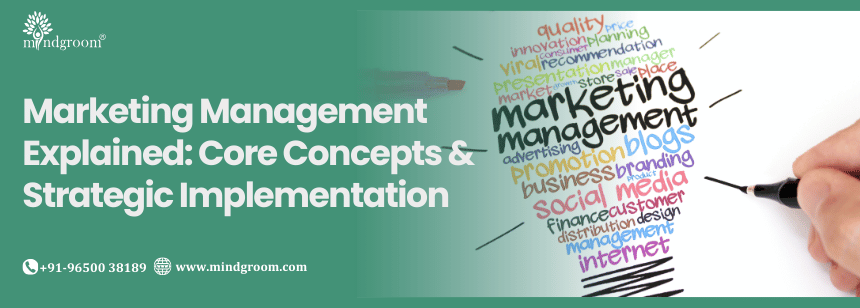
Marketing Management Explained: Core Concepts & Strategic Implementation
In today's dynamic business environment, success is not merely about having a superior product or service; it's about strategically connecting with the right audience, understanding their needs, and delivering compelling value. This intricate dance between business objectives and customer desires is orchestrated by marketing management. It's the discipline that transforms potential into loyalty, and ideas into market leadership. For businesses aiming to thrive, a deep understanding of marketing management—from its foundational principles to its sophisticated implementation—is no longer optional, but essential. This article will demystify the core concepts of marketing management and explore how to strategically implement them for maximum impact, guiding you through the essential frameworks and forward-thinking approaches that define effective modern marketing.
Understanding Marketing Management: The Foundational Principles
At its heart, marketing management is the systematic process of planning, implementing, and controlling marketing activities to achieve organizational objectives. It's the strategic brain and operational engine that directs an organization's marketing efforts towards its target customers and desired outcomes. This discipline ensures that every marketing initiative is purposeful, aligned with business goals, and designed to create lasting value for both the customer and the company.
A. What is Marketing Management? A Holistic Definition
Marketing management encompasses the analysis, planning, implementation, and control of programs designed to create, build, and maintain profitable exchanges with target markets. It's about understanding the market landscape, identifying opportunities, developing strategies to capitalize on them, and executing these strategies effectively. Unlike simple marketing, which might focus on individual tactics or campaigns, marketing management provides the overarching framework, ensuring that all marketing actions are integrated and contribute to overarching business objectives. At its core, it’s about managing the entire marketing function—from product development to customer retention—with a clear focus on meeting customer needs profitably. This often involves understanding the difference between marketing and selling, where marketing is a broader strategic approach focused on understanding and satisfying customer needs, while selling is a more tactical aspect of persuading a customer to purchase.
B. The Strategic Imperative: Why Marketing Management Matters
Effective marketing management is crucial for several reasons. It's the engine that drives customer acquisition and retention, builds strong brand equity, and ultimately fuels business growth and profitability. By strategically aligning marketing efforts with business goals, organizations can achieve a sustainable competitive advantage. It ensures that resources are allocated efficiently, maximizing return on investment and minimizing waste. Without robust marketing management, a company risks disconnected initiatives, missed opportunities, and a failure to resonate with its intended audience. In essence, it’s the disciplined approach that translates market potential into tangible business success.
C. Key Roles and Responsibilities of a Marketing Manager
The marketing manager is the pivotal figure responsible for overseeing and executing the marketing strategy. Their responsibilities are diverse and demanding, often including: conducting thorough market research to understand customer needs and market trends; developing and implementing comprehensive marketing strategies and plans; managing marketing budgets and allocating resources effectively; overseeing the creation and execution of marketing campaigns, including digital marketing and content creation; coordinating with other departments, such as sales, product development, and customer support, to ensure alignment; analyzing marketing performance data to measure effectiveness and identify areas for improvement; and leading and empowering their marketing team. They act as the crucial link between the company's offerings and the external market, ensuring the company’s message is heard and acted upon by the target customer.
Core Concepts: The Building Blocks of Marketing Strategy
A robust marketing strategy is built upon a deep understanding of fundamental concepts. These elements provide the analytical tools and strategic frameworks necessary to navigate the market, understand the customer, and craft a compelling value proposition. Mastering these building blocks is essential for any marketing manager aiming to drive impactful campaigns and achieve sustained success.
A. Market Research & Customer Insights: Fueling Strategic Decisions
The bedrock of any effective marketing strategy is comprehensive market research. This process involves gathering, analyzing, and interpreting information about a market, about a product or service that could be offered for sale in that market, and about the past, present, and potential customers for the product or service. The goal is to uncover actionable customer insights—a deep understanding of customer needs, wants, behaviors, and pain points. This information is invaluable for making informed strategic decisions, from product development to campaign messaging. For instance, understanding that 90% of consumers say they trust online reviews highlights the importance of reputation management in research.
B. Segmentation, Targeting, and Positioning (STP): Defining Your Battlefield
STP is a strategic framework used to identify and engage with specific groups of customers. Segmentation involves dividing a broad market into smaller, more manageable segments based on shared characteristics (e.g., demographics, psychographics, behavior). Targeting then involves selecting one or more of these segments to focus marketing efforts on. Positioning is the final step, where a company crafts a clear and distinct image and value proposition for its product or service in the minds of the target consumers, differentiating it from competitors. This process allows businesses to concentrate their resources on Target Markets where they can achieve the greatest impact and establish a distinct competitive advantage.
C. The Marketing Mix (4 Ps and Beyond): Strategic Deployment of Resources
The marketing mix, traditionally represented by the 4 Ps—Product, Price, Place, and Promotion—is a set of tactical marketing tools that a firm uses to produce the response it wants in the target market.
- Product: This involves product development, focusing on features, design, branding, packaging, and services that meet customer needs.
- Price: Determining the optimal pricing strategy, considering cost, competition, customer perceived value, and profitability objectives.
- Place (Distribution): Deciding how to make the product or service available to the target customers, including channels, logistics, and inventory management.
- Promotion: Communicating the value of the product or service to the target audience through advertising, public relations, social media, sales promotion, and personal selling.
Beyond the traditional 4 Ps, modern marketing often incorporates additional elements such as People, Process, and Physical Evidence, especially in service industries. The strategic use of these elements ensures that the marketing strategy is translated into tangible actions that reach and influence the target customer.
D. Brand Management & Brand Equity: Cultivating Your Identity
Brand management is the process of creating, maintaining, and enhancing a brand’s identity and perception in the market. A strong brand is more than just a name or logo; it's a promise to the customer, a symbol of quality, and a driver of loyalty. Brand equity refers to the commercial value derived from consumer perception of the brand name of a particular product or service, rather than from the product or service itself. Building strong brand equity through consistent messaging, superior customer experiences, and positive associations allows businesses to command premium pricing, foster customer loyalty, and gain a significant competitive advantage.
Strategic Marketing Management: Planning for Impact and Integration
Effective marketing management hinges on developing a coherent and actionable strategy that is deeply integrated with the overall business objectives. This involves meticulous planning, a clear vision, and a structured approach to translating market insights into actionable programs.
A. Developing a Comprehensive Marketing Strategy
A comprehensive marketing strategy outlines how an organization will achieve its marketing objectives. This begins with setting clear, measurable, achievable, relevant, and time-bound (SMART) goals. The strategy should articulate the organization's vision for its market presence, define its target Target Markets, and detail how it will achieve a sustainable competitive advantage. It requires a thorough analysis of the internal capabilities and external market environment, often using frameworks like SWOT (Strengths, Weaknesses, Opportunities, Threats). This strategic blueprint guides all subsequent marketing efforts, ensuring they are aligned and purposeful.
B. Integrating Marketing with Overall Business Strategy
Marketing strategy does not operate in a vacuum; it must be inextricably linked with the broader business strategy. This integration ensures that marketing efforts support the company’s overarching mission, vision, and financial goals. It requires cross-functional collaboration, where marketing teams work closely with sales, product development, finance, and operations. For example, product development must be informed by market research insights, and sales strategies must align with marketing's customer acquisition efforts. This synergy ensures that the entire organization is working cohesively towards common objectives, maximizing overall business performance.
C. The Annual Marketing Plan: From Strategy to Actionable Programs
The annual marketing plan serves as the tactical roadmap that translates the strategic vision into concrete actions for the coming year. It details specific marketing campaigns, channel strategies, budget allocations, and timelines. This plan breaks down the overarching strategy into manageable programs and initiatives, outlining the necessary resources, responsibilities, and key performance indicators (KPIs) for each. A well-structured annual plan ensures that marketing efforts are coordinated, resources are utilized efficiently, and progress can be monitored against predefined objectives. This document is a critical tool for managing marketing campaigns and ensuring that the strategy is effectively implemented.
Strategic Implementation: Turning Plans into Performance
The most brilliant strategy is rendered ineffective without meticulous execution. Strategic implementation is where plans are brought to life, leveraging a diverse toolkit of tactics and technologies to achieve tangible results. This phase demands agility, data-driven decision-making, and a well-coordinated team.
A. Effective Campaign Management & Execution
Successful marketing campaigns are the visible outputs of effective marketing management. This involves detailed planning, creative development, precise targeting, and timely execution across chosen channels. Effective campaign management ensures that all aspects of a campaign—from messaging and creative assets to media buying and performance tracking—are synchronized and optimized for maximum impact. It requires project management discipline to stay on schedule and within budget, while also allowing for flexibility to adapt to real-time performance data and market feedback. This meticulous approach ensures that each campaign contributes significantly to broader marketing objectives.
B. Leveraging Digital & Content Marketing Strategically
In today's landscape, digital marketing and content marketing are indispensable components of any comprehensive strategy. Digital channels, including social media, search engines, email, and mobile platforms, offer unprecedented reach and targeting capabilities. Content marketing, the creation and distribution of valuable, relevant, and consistent content, attracts and retains a clearly defined audience, ultimately driving profitable customer action. With 89% of businesses using video marketing and 83% of consumers wanting more video content from brands, video is a key content format. Furthermore, with social media advertisement spending projected to exceed $230 billion, and global mobile advertising spending exceeding $300 billion, digital channels are critical. Content created for these platforms must be strategic, engaging, and aligned with audience interests, contributing to brand awareness, lead generation, and customer engagement.
C. Data-Driven Decision Making & Optimization
The ability to collect, analyze, and act upon data is paramount in modern marketing. This involves tracking key performance indicators (KPIs) across all marketing activities, from website traffic and conversion rates to social media engagement and customer acquisition cost. Analyzing this data provides insights into what's working, what's not, and where opportunities for improvement lie. This data-driven approach allows for continuous optimization of campaigns, strategies, and resource allocation, ensuring that marketing efforts are as efficient and effective as possible. By focusing on measurable outcomes, marketers can demonstrate ROI and refine their approach for better results.
D. Building and Empowering the Marketing Team
A high-performing marketing team is the engine that drives successful implementation. This involves recruiting individuals with diverse skill sets, fostering a collaborative and innovative culture, and providing the necessary training and resources. Effective leadership involves clearly defining roles and responsibilities, setting clear expectations, and empowering team members to take ownership of their work. A well-structured and motivated team can navigate complex projects, adapt to changing market conditions, and execute marketing campaigns with precision and creativity. This focus on human capital is as critical as any technological investment.
Advanced Strategic Implementation: Emerging Trends & Future-Proofing
The marketing landscape is in constant flux, shaped by technological advancements and evolving consumer expectations. Advanced strategic implementation requires a forward-looking approach, anticipating trends and adapting strategies to remain competitive and relevant.
A. The Impact of AI and Automation on Marketing Management
Artificial Intelligence (AI) and automation are rapidly transforming marketing management. AI can analyze vast amounts of data to uncover complex patterns, predict consumer behavior, and personalize customer interactions at scale. Automation streamlines repetitive tasks, freeing up marketing professionals to focus on higher-level strategic thinking and creative execution. As 71% of marketers plan to invest at least $10 million into AI over the next three years, understanding and integrating these technologies is no longer a luxury but a necessity for gaining an edge.
B. Hyper-Personalization and Customer Relationship Management (CRM)
Hyper-personalization, driven by sophisticated CRM systems and AI, allows marketers to tailor messages, offers, and experiences to individual customer needs and preferences. This moves beyond basic segmentation to treat each customer as a unique entity. By leveraging detailed information stored in CRM platforms, businesses can build stronger relationships, enhance customer satisfaction, and foster loyalty. This focus on individual customer journeys significantly improves engagement and conversion rates, transforming a transactional relationship into a long-term partnership.
C. Global Marketing Management Considerations
For businesses operating across borders, global marketing management introduces complexities related to cultural differences, varying regulations, and diverse market conditions. Successful global strategies require careful localization of products, messaging, and marketing campaigns to resonate with local audiences while maintaining a cohesive global brand identity. Understanding international Target Markets and adapting approaches accordingly is crucial for achieving success in a globalized economy.
D. Measuring Strategic Impact: Beyond Basic Metrics
Moving beyond simple metrics like website clicks or social media likes, measuring strategic impact involves evaluating how marketing efforts contribute to overarching business goals. This includes analyzing metrics such as Customer Lifetime Value (CLV), brand sentiment, market share growth, and attribution modeling to understand the true impact of marketing on revenue and profitability. This deeper analysis allows for more effective strategic adjustments and ensures that marketing investments are demonstrably contributing to the company's bottom line.
Challenges in Marketing Management and Strategies to Overcome Them
Navigating the complexities of marketing management inevitably presents challenges. Recognizing these hurdles and developing proactive strategies to overcome them is a hallmark of effective leadership.
A. Navigating Data Overload and Analysis Paralysis
The sheer volume of available marketing data can be overwhelming, leading to "analysis paralysis" where decision-making is stalled. The key is to focus on a select set of critical KPIs aligned with strategic objectives. Utilizing data visualization tools and dashboards can help present information in a clear, actionable format, enabling quicker insights and more decisive actions.
B. Adapting to Rapid Technological Change
The pace of technological advancement in marketing is relentless. Staying current requires a commitment to continuous learning and experimentation. Embracing agile methodologies, fostering a culture of innovation, and dedicating resources to exploring new tools and platforms are essential for adapting to these changes effectively.
C. Proving ROI and Budget Constraints
Demonstrating the return on investment (ROI) of marketing activities, especially in the face of tight budgets, is a persistent challenge. Clear goal setting, meticulous tracking of performance metrics, and robust reporting are crucial. By focusing on measurable outcomes and utilizing cost-benefit analysis, marketing managers can justify their budgets and showcase their value to the organization.
D. Bridging Internal Silos and Fostering Collaboration
Marketing often needs to collaborate extensively with other departments, such as sales, product, and customer support. Internal silos can impede communication and hinder effective strategy execution. Strategies to overcome this include establishing cross-functional teams, defining shared objectives, implementing transparent communication protocols, and fostering a culture of mutual respect and collaboration across departments.
Conclusion
Marketing management is a multifaceted discipline that demands strategic foresight, analytical rigor, and creative execution. From understanding the fundamental principles of marketing and the core concepts of strategy like STP and the marketing mix, to the intricate processes of planning and implementing effective marketing campaigns, the discipline guides businesses toward sustained growth. In today's rapidly evolving digital landscape, leveraging digital marketing, content marketing, and sophisticated data analysis is crucial. Building and empowering a high-performing team, embracing emerging technologies like AI, and focusing on customer-centricity through CRM are vital for future success.
The journey of mastering marketing management is ongoing. By consistently applying these principles, diligently analyzing performance, and proactively addressing challenges, organizations can not only achieve their marketing objectives but also build enduring customer relationships and secure a dominant competitive advantage. Whether you're pursuing a marketing course or refining your existing professional practice, a deep dive into these strategic elements will equip you to navigate the complexities of the modern market and drive significant business impact. The key takeaway is that effective marketing management is not a static set of tools, but a dynamic, adaptive process centered on delivering exceptional value to the customer.
Frequently Asked Question’s (FAQ’s)
Marketing management means planning, organizing, implementing, and controlling marketing strategies to satisfy customer needs and achieve business goals.
The marketing management process includes market analysis, planning, implementation, and control of marketing activities.
Marketing management helps businesses identify customer needs, improve sales, build brand value, and stay competitive in the market.
Key concepts include customer orientation, value creation, market segmentation, targeting, positioning, and relationship management.
Yes, marketing management offers strong career opportunities in sales, digital marketing, brand management, and business development.
Looking For Job Satisfaction on the long run?
Please feel free to contact our experts
Call to ask any question
+91-9319336222Monday to Saturday
(9:00 AM to 8:00 PM)Resent Blogs

10 Things to Do During an Interview to Impress Your Future Employer
Learn More
Crafting Your Personal Narrative: A Guide to Writing About Yourself
Learn More
Top 10 Essential Interview Questions and Expert Answers for 2025
Learn More
Ace Your Next Interview: Essential Questions and Expert Answers for 2025
Learn More
First-Time Manager Interview: Crucial Questions and Strategies for Success
Learn More
150 Essential General Knowledge Questions for Interviews in 2025
Learn More
Master the Google Interview: Strategies for Success in 2025
Learn More
How Can You Describe Yourself Professionally? 5 Key Strategies You Need to Know
Learn More
Mastering the Art of How to Take Interview: Essential Techniques for Success
Learn More
25 Essential HR Interview Questions and Answers PDF You Can't Ignore
Learn More
7 Tips to Ace Your HR Screening Round and Land Your Dream Job
Learn More
10 Essential Tips for Acing Your Interview Exam
Learn More
5 Unique Interview Format Examples to Stand Out in Your Next Interview
Learn More
5 Powerful Techniques for a Memorable Interview Introduction
Learn More
Master Your Next Interview with These Top Interview Preparation Apps
Learn More
Mastering the Art: Top Interview Questions for 12th Class Students
Learn More
7 Must-Know Interview Questions for Freshers to Ace Your Job Hunt
Learn More
Mastering Interview Questions for HR Position with Answers: Strategies for Success
Learn More
12 Essential Interview Questions for Recruiter Position You Should Prepare For
Learn More
10 Must-Know Interview Questions UK Employers Love to Ask
Learn More
10 Creative Interview Writing Examples to Spark Your Imagination
Learn More
15 Essential Managerial Interview Questions for Freshers to Prepare
Learn More
15 Unique Marketing Interview Questions You Haven't Prepared For
Learn More
7 Key Strategies for a Successful Mock Interview Session
Learn More
The Ultimate Guide to Model Interview Questions: What You Need to Know
Learn More
5 My Self Question Exercises to Unlock Your True Potential
Learn More
10 Normal Questions That Can Spark Deep Conversations
Learn More
15 Essential Personal Interview Questions for Freshers to Ace Your Next Job
Learn More
10 Essential Phone Interview Questions You Can’t Afford to Ignore
Learn More
15 Essential Sales Interview Questions and Answers for Freshers
Learn More
7 Key Situational Interview Questions Every Employer Should Ask
Learn More
15 Essential Software Developer HR Interview Questions You Need to Prepare For
Learn More
Mastering the Technical Interview: Essential Questions and Answers
Learn More
Top Strategies for Responding to Tell Me About Yourself in a Student Interview
Learn More
Top 10 Interview Questions and Expert Answers
Learn More
Mastering the Art of Interviewing: 50 Tough Questions and Smart Answers
Learn More
How to Ace Your Next Mock Interview: Tips and Strategies for Success
Learn More
Your Ultimate Guide: 60 Insightful Questions to Ask Interviewers
Learn More
Crafting the Perfect Response to Why Do You Want This Job?
Learn More
Unique Ways to Tackle the Question Why Should We Hire You?
Learn More
Why Should We Hire You? - Top 10 Answers for Customer Service Roles
Learn More
Mastering the Art of Discussing Work Experience in Interviews
Learn More
Mastering Your Sales Interview: 50 Essential Questions and Answers
Learn More
Career Paths After 12th Commerce: Your Future Starts Here
Learn More
Explore One-Year Courses After 12th for Non-Medical Students
Learn More
Quick Career Paths: 2-Year Degree Courses After 12th for Fast-Track Success
Learn More
Comprehensive Guide: Courses After 12th Commerce
Learn More
Top 10 Lucrative Courses to Consider After Completing Engineering
Learn More
Advancing Your Career: Top Choices After B.Tech in 2025
Learn More
Explore Your Future: After CET Exam Which Course is Best for Aspiring Professionals?
Learn More
5 Reasons Why After Inter CEC, Choosing the Right Course is Crucial
Learn More
After PUC Which Course is Best for Aspiring Engineers? Explore Your Options!
Learn More
Unlocking Your Future: Best Arts and Science Courses After 12th for 2025
Learn More
Why a Bachelor Degree in Commerce is Your Pathway to Success
Learn More
15 Best Career Courses to Boost Your Earning Potential in 2025
Learn More
Emerging Career Fields for 2025: What You Need to Know
Learn More
Exploring In-Demand Career Paths After 12th: Science, Arts, Commerce
Learn More
15 Lucrative Science Careers You Should Consider
Learn More
High-Paying Career Paths for Girls After 12th Commerce
Learn More
Top 10 High Salary Career Courses After 12th Biology
Learn More
Top 10 High-Paying BSc Specializations for 2025
Learn More
Exploring the Future: Innovative Career Paths for B.Tech Graduates in 2025
Learn More
Comprehensive Guide to B.Tech Specializations for MPC Graduates
Learn More
Unlocking Your Potential: The Ultimate B Tech Job List for 2025
Learn More
B.Tech Salary Insights: How Much Can You Earn Per Month?
Learn More
Essential Business Courses After 12th: Your Guide to a Successful Career
Learn More
How Commerce Students Can Transition to BSc IT
Learn More
Exploring Career Paths After 12th: Your Guide to Success in 2025
Learn More
Certainly! Here are 10 additional title ideas inspired by the list you provided
Learn More
Exploring Career Paths After Engineering: Your Guide to the Future
Learn More
The Ultimate Guide to Career Options Post-High School Graduation
Learn More
Discover the Top 10 Chemistry Courses After 12th That Lead to High-Paying Jobs
Learn More
Explore the Best Diploma and Certificate Programs After 12th Commerce
Learn More
Career Paths for Computer Science Graduates: Top Opportunities to Explore
Learn More
Explore Top Courses After 12th: Your Path in Science, Arts, or Commerce
Learn More
Top 10 Courses After 12th Commerce for a Successful Career
Learn More
Top Paying Professional Courses After 12th for Commerce Students
Learn More
Emerging Career Paths After 12th Commerce Without Maths
Learn More
Exploring Career Paths After 12th Science: A Complete Guide
Learn More
Comprehensive Guide to Courses and Career Paths after 12th Grade
Learn More
Emerging Career Paths in India: What to Expect in 2025
Learn More
Top Diploma Paths for Students After Completing 12th Science
Learn More
Top 15 Easiest High-Paying Jobs to Pursue in India by 2025
Learn More
Navigating Your Future: Easy Degree Options After 12th
Learn More
Exploring Top Engineering Branches After 12th: A Comprehensive Guide
Learn More
Exploring Advanced Studies: Top Entrance Exams for Engineering Graduates
Learn More
MBA Salary Insights: Top Packages and Compensation Trends in India
Learn More
Top 15 Lucrative Careers in India for 2025
Learn More
Top 10 High-Paying Jobs for Commerce Graduates Without Maths
Learn More
Top 10 High Salary Courses After 12th PCB for Future Success
Learn More
High-Earning Courses to Pursue After 12th Science in 2025
Learn More
High Paying Career Paths for BiPC Students: Top 10 Courses to Consider
Learn More
Exploring High-Paying Engineering Degrees for the Future
Learn More
Exploring Integrated Courses After 12th: A Comprehensive Guide for Students
Learn More
Exploring Career Prospects: What Can You Do with a BBA Degree?
Learn More
Top 15 In-Demand Professional Courses for Commerce Graduates in 2025
Learn More
Exploring Lucrative Job Paths for BBA Graduates in 2025
Learn More
MBA Full Form Explained: Master of Business Administration & Its Strategic Career Value
Learn More
BBA Full Form: The Definitive Guide to BBA Degrees, Admissions, & Career Paths
Learn More
BCA Full Form Explained: Your Complete Guide to the Degree, Admission & Career Scope
Learn More
IAS Full Form: Indian Administrative Service Explained & Its Pivotal Role
Learn More
MBBS Full Form: Unraveling the Meaning Behind a Doctors Qualification
Learn More
UPSC Full Form: Union Public Service Commission and Its Vital Role
Learn More
BSc Full Form: Bachelor of Science & What It Means for Your Future
Learn More
ITI Full Form: What Exactly is Industrial Training Institute?
Learn More
LLB Full Form: Your Ultimate Guide to Bachelor of Laws, Eligibility & Career Scope
Learn More
Is There a True Computer Full Form? Unpacking the Popular Acronym
Learn More
B.Tech Full Form Unpacked: Meaning, Scope, and Why It Matters for Your Career
Learn More
IIT Full Form: Unveiling the Indian Institute of Technology and Its Legacy
Learn More
MCA Full Form Revealed: Master of Computer Applications & Its Significance
Learn More
IIT Full Form: Indian Institute of Technology – Understanding Its Legacy, Campuses, and Global Standing
Learn More
Your Complete Guide to Becoming a Veterinarian: Education, Specialties & Career Paths
Learn More
BSc Degree: Your Complete Guide to Courses, Careers, and Future Prospects
Learn More
B.Com Full Form Unveiled: What Bachelor of Commerce Truly Means
Learn More
BAMS Full Form: Bachelor of Ayurvedic Medicine and Surgery — Unpacking Its Meaning & Career Scope
Learn More
What is a Polytechnic? Your Complete Guide to Courses, Admissions & Career Paths
Learn More
SSC GD Constable Exam News 2025-26: Latest Updates on Vacancies, Dates & Application
Learn More
How to Choose the Best Veterinarian for Your Pet: A Comprehensive Guide
Learn More
Air Hostess 2026: Your Complete Roadmap to Landing the Dream Job
Learn More_Thumbnail_.png )
Unlocking Your Future: The Ultimate BSc Degree Guide (Courses, Careers & Admissions)
Learn More_Thumbnail_.png )
CMA Full Form: Certified Management Accountant (Global Standard Explained)
Learn More
NACH Full Form Explained: What It Is & Why It Matters in Banking
Learn More
The Modern Anthropologist: Understanding Their Role, Impact, and Diverse Specializations
Learn More
BBA: Your Ultimate Guide to Course Details, Admission, Fees, and Future Career Prospects
Learn More
BDS Full Form Unpacked: Your Essential Guide to Dentistry Courses, Admissions & Career Scope
Learn More
BHMS Full Form Revealed: Your Complete Guide to Bachelor of Homeopathic Medicine & Surgery
Learn More
B.Tech Admissions 2026: Your Complete Guide to Courses & Eligibility
Learn More
CFA Full Form: Understanding the Chartered Financial Analyst Designation
Learn More
Merchant Navy Salary in India: Unveiling Pay Scales by Rank & Experience
Learn More
TS EAMCET 2026: Official Notification, Exam Dates & Application Guide
Learn More
VITEEE 2026: Full Guide to Application, Dates, Syllabus & Preparation
Learn More
BMS Full Form: Unveiling Bachelor of Management Studies & What it Entails
Learn More
B.Sc. Computer Science: Your Complete Guide to Courses, Careers & Eligibility
Learn More
Computer Science Explained: From Basics to Advanced Concepts
Learn More
Worlds Most Difficult Exams: A Definitive Ranking for 2025
Learn More_All_You_Need_to_Know_Thumbnail_.png )
Union Public Service Commission (UPSC): All You Need to Know
Learn More
BE Full Form Explained: What Bachelor of Engineering Means & Your Career Path
Learn More
DMIT Full Form Revealed: Unpacking the Dermatoglyphic Multiple Intelligence Test
Learn More
Indias Most Difficult Exams: The Ultimate Ranking for 2025
Learn More
CLAT Full Form: Unveiling the Common Law Admission Test + Key Details
Learn More
Highest Paying Jobs in India: Unveiling the Top 25 Roles & Their Lucrative Salaries
Learn More
MA Full Form: Unpacking the Master of Arts Degree & What It Entails
Learn More
Marketing Management Explained: Core Concepts & Strategic Implementation
Learn More
BCA Course Subjects: A Comprehensive Guide to Your IT Degree Curriculum
Learn More
CAT Exam Date 2026: When to Apply & Exam Schedule Revealed
Learn More
CDS Full Form: Unveiling Combined Defence Services & Your Path to Commission
Learn More
Lab Technician Career Path: Duties, Skills, and Salary Guide
Learn More
Your Complete Guide to Becoming a Successful Software Developer
Learn More
Air Hostess Course Guide: Everything You Need to Know for Your Aviation Career
Learn More
Introduction: Navigating Your Path to Medical Excellence in India
Learn More
Top Commerce Courses After 12th: Unlock Lucrative Career Paths
Learn More
Top Industrial Training Institutes: Your Guide to Skilled Trades
Learn More
Understanding Psychometric Tests: Your Definitive Guide & Free Examples
Learn More
What Does a Surgeon Do? A Comprehensive Guide to the Profession
Learn More
UG Explained: Your Ultimate Guide to Undergraduate Degrees & Admissions
Learn More
10th Pass Govt Jobs 2026: Your Complete Guide to Apply & Secure Your Career
Learn More
ATMA: Your Complete Guide to the Management Admissions Test
Learn More
BHMS Course Guide: Eligibility, Syllabus, Career Prospects & Top Colleges
Learn More
Unlock Your Future: The Definitive Guide to Career Counselling
Learn More
What Does a Clinical Psychologist Do? Your Comprehensive Guide
Learn More_Thumbnail_.png )
M.Tech Full Form: Master of Technology Explained (Meaning, Scope & Benefits)
Learn More
Radiology Courses Explained: From Certificates to Masters Degrees
Learn More
BSc Courses Explained: Full Guide to Specializations, Admissions & Career Paths
Learn More
BSc Nursing Course: Admission Guide, Eligibility, Syllabus & Career Paths
Learn More
BA LLB Full Form Explained: Unpacking Bachelor of Arts & Bachelor of Laws
Learn More
Top BBA Colleges in India: Unveiling the Elite Institutions for Your Management Degree
Learn More
UPSC CDS Exam Date 2026: Complete Schedule & Notification Details
Learn More
Top Career-Focused Courses After 12th Grade: Unlock Your Future
Learn More
Explore the World of Humanities Subjects: A Comprehensive Guide
Learn More
IPU CET 2026: Complete Guide to Applications, Syllabus & Cutoffs
Learn More
ISI Full Form: Unveiling the Meaning & Importance of the Indian Standards Institute
Learn More
JEE Advanced 2026 Exam Date: When Will the Exam Be Held?
Learn More
JEE Main 2026 Result Date: When to Expect Session 1 & 2 Results
Learn More
MCA Course Guide: Everything You Need to Know About Eligibility, Fees, and Admissions
Learn More
Multimedia Explained: Your Complete Guide to Definition, Examples, and Impact
Learn More
The Ultimate Paramedical Courses List: Find Your Perfect Career Path
Learn More
Pharm.D. Program: Your Complete Guide to Curriculum, Admissions & Outcomes
Learn More
The Ultimate Guide to Top IIT Colleges in India: Ranking, Admissions, and Courses
Learn More
ATC Full Form: Unpacking Air Traffic Control, Anatomy & More
Learn More
B.Ed. Course Duration in India: Everything Aspiring Teachers Need to Know
Learn More
B.Sc Psychology Degree: Your Guide to Admissions, Curriculum & Career Paths
Learn More
B.Tech Computer Science: Your Complete Guide to Admission, Syllabus & Career Prospects
Learn More
BDS Course Duration: How Long is Bachelor of Dental Surgery?
Learn More
BFA Full Form Explained: What is a Bachelor of Fine Arts & Why it Matters
Learn More
Biology Explained: What It Is, Its Core Concepts & Why It Matters
Learn More
BPT Course: Your Complete Guide to Bachelor of Physiotherapy Admissions
Learn More
BSc Nursing Full Form: What it Means and Why it Matters
Learn More
The Science Complete Guide: Best Courses & Career Paths Revealed
Learn More
Master Your Future: Your Complete Guide to 2026 Government Exams & How to Prepare
Learn More
MPhil Explained: Your Complete Guide to the Master of Philosophy
Learn More
Become a Certified Stenographer: Your Complete Course Guide
Learn More
TANCET 2026: Complete Exam Guide - Dates, Syllabus, and Preparation Tips
Learn More
Upcoming Government Exams 2026: Full Schedule, Eligibility & Application Dates
Learn More
What is CA? The Complete Guide to Chartered Accountancy and Your Career Path
Learn More
Agnipath Scheme Explained: Eligibility, Benefits, Salary & Career Path
Learn More
AFCAT 2026: Your Complete Guide to the Air Force Common Admission Test
Learn More
B Pharm Course Duration: How Long Does it Really Take to Get Your Pharmacy Degree?
Learn More
Top Commerce Colleges in India: Your Ultimate Ranking & Admission Guide
Learn More
Top Arts Courses After 12th: Unlock Your Creative & Professional Future
Learn More
Diploma in Mechanical Engineering: Your Path to a Rewarding Career
Learn More_Thumbnail_.png )
Unlock Your Future: Top High-Paying Courses After 12th Science (PCM & PCB)
Learn More_Officer_Salary_In-depth_Breakdown_Perks_Thumbnail_.png )
Indian Foreign Service (IFS) Officer Salary: In-depth Breakdown & Perks
Learn More
M.Ed. Full Form: What Master of Education Means & Why It Matters
Learn More
Understanding India's Paramilitary Forces: Roles, Responsibilities, and Key Units
Learn More
RBI Assistant 2026: Full Details on Notification, Vacancies & Application Process
Learn More
Relationship Manager Salary, Duties, and Career Path Explained
Learn More
Unlocking Your Science Journey: A Complete Guide to Science Subjects
Learn More
Unlock Your Career: The Ultimate Guide to Vocational Courses and Training Programs
Learn More
Top Courses After 10th Grade: Your Guide to Future Careers & Salaries
Learn More
MP Police ASI Recruitment: Latest Notification, Eligibility & Application Guide
Learn More
B.Arch Admissions: Your Complete Guide to Eligibility, Exams & Top Colleges
Learn More
B.Com Honours Degree: Your Complete Guide to Admission & Career Prospects
Learn More
BA Psychology Degree: Your Guide to Programs, Careers & Admissions
Learn More
BBS Full Form Explained: Bachelor of Business Studies - Your Career Guide
Learn More
Biotech Engineering: Your Guide to Innovation in Life Sciences
Learn More
BPA Full Form: Unpacking Bisphenol A and Its Impact
Learn More
BSW Full Form: What Bachelor of Social Work Means and Why It Matters
Learn More
BVSc Full Form Explained: What Does Bachelor of Veterinary Science Mean?
Learn More
Become a Customs Officer: Your Complete Career Guide
Learn More
DCH Full Form in Medical: Understanding the Diploma in Child Health
Learn More
Top Diploma Courses After 10th: Your 2026 Career Guide
Learn More
Unlock Your Tech Career: The Ultimate Guide to a Diploma in Computer Science
Learn More
Your Step-by-Step Guide: How to Become a Software Engineer
Learn More
Indian Forest Service Salary: Unveiling the Full Pay Scale & Perks for IFS Officers
Learn More
JEECUP Admit Card 2026: Download Hall Ticket & Exam Day Guide
Learn More
Your Guide to Junior Colleges: Admissions, Programs & Best Choices
Learn More
Lateral Entry Admissions: Your Complete Guide to Second Year College Admissions
Learn More
Introduction: Elevating Your Pharmacy Career with a Master's Degree
Learn More
Introduction: Why the Master of Science is the Engine of the Modern Economy
Learn More
Introduction: The Journey to Becoming a Physician
Learn More
The Evolution of Network Engineering: Defining the 2026 Landscape
Learn More
Connet Us
Unlock Your Dream Career Potential - Get Expert Advice From Our Counselling Experts


