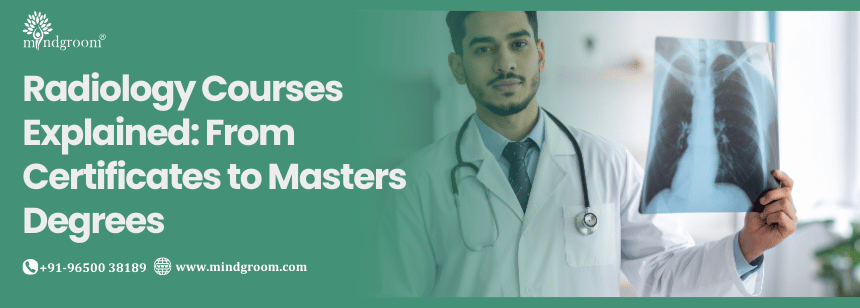
Radiology Courses Explained: From Certificates to Masters Degrees
Introduction: Navigating Your Path in Medical Imaging
The field of radiology, a cornerstone of modern medicine, offers a dynamic and rewarding career path for those passionate about diagnostic imaging and patient care. From the intricate workings of Magnetic Resonance Imaging (MRI) to the foundational principles of X-rays, medical imaging techniques are indispensable tools that allow doctors to visualize the inner workings of the human body, diagnose diseases, and guide treatment. This vital sector within healthcare is constantly evolving, driven by technological advancements and an increasing demand for skilled professionals.
Navigating the educational landscape of radiology can feel complex, with a diverse array of courses ranging from short-term certificates to advanced Master's degrees. Whether you are a high school graduate exploring initial career options, a healthcare professional seeking to specialize, or someone looking for a career change into a rapidly growing industry, understanding these pathways is crucial. This article demystifies the educational journey in radiology, outlining the various courses available, their specific objectives, and how they align with diverse career aspirations. We will explore everything from the foundational skills gained through certificates and diplomas to the specialized knowledge acquired through Bachelor's and Master's degrees, empowering you to make informed decisions about your future in this critical field.
The Vital Role of Radiology in Modern Healthcare
Radiology is an integral part of modern healthcare, serving as the eyes of physicians in diagnosing and treating a vast spectrum of medical conditions. Imaging techniques, including X-rays, Computed Tomography (CT scans), Magnetic Resonance Imaging (MRIs), Ultrasounds, and Nuclear Medicine, provide non-invasive or minimally invasive insights into the body's internal structures. These imaging modalities are essential for early disease detection, monitoring treatment progress, and enabling precise surgical interventions. Without the detailed information provided by radiologists and radiologic technologists, countless medical decisions would be based on speculation rather than evidence. The continuous advancement in these imaging techniques directly translates to improved patient care and more effective healthcare delivery worldwide.
Article Overview: Demystifying Educational Pathways
This article provides a comprehensive guide to the educational routes available in radiology and medical imaging. We will begin by defining the field and its significance, followed by an exploration of entry-level qualifications like certificates and diplomas. Subsequently, we will delve into the foundational Bachelor's degrees, and then examine postgraduate diplomas and Master's degrees for specialization. We will also touch upon continuing professional development and crucial factors to consider when selecting a program. Finally, we will look ahead to the future of radiology and how it is shaping educational needs. Our aim is to equip you with the knowledge necessary to choose the path that best suits your career goals and aspirations within this dynamic sector of healthcare.
Understanding the Landscape of Radiology Education
What is Radiology and Medical Imaging?
Radiology is the medical specialty that uses imaging techniques to diagnose and treat disease. Medical imaging, a core component of radiology, involves creating visual representations of the interior of a body for clinical analysis and medical intervention. Professionals in this field utilize a range of sophisticated equipment to generate images that help doctors and other healthcare providers assess injuries, detect abnormalities, and understand disease progression. Key imaging modalities include:
- X-rays: The oldest form of imaging, used for bones, chest imaging, and detecting foreign objects.
- Computed Tomography (CT): Uses X-rays taken from multiple angles to create cross-sectional images, valuable for detailed views of organs, soft tissues, and bones. CT scans are particularly useful for trauma, cancer detection, and vascular disease.
- Magnetic Resonance Imaging (MRI): Employs strong magnetic fields and radio waves to produce highly detailed images of soft tissues, organs, and bone marrow. MRIs are excellent for imaging the brain, spine, joints, and internal organs without using ionizing radiation.
- Ultrasound: Uses high-frequency sound waves to create images, commonly used in obstetrics, cardiology, and abdominal imaging. It is a safe and versatile imaging technique.
- Nuclear Medicine: Involves administering small amounts of radioactive substances (radiotracers) that are detected by special cameras to create images showing how organs and tissues are functioning. This modality is crucial for diagnosing conditions like cancer, heart disease, and neurological disorders.
These technologies are operated by skilled professionals, primarily radiologic technologists and interpreted by radiologists, who are specialized doctors.
Why a Career in Radiology? Demand, Innovation, and Impact
A career in radiology offers a compelling blend of intellectual challenge, technological engagement, and direct impact on patient care. The field is experiencing robust growth; the global Radiology market was valued at USD 31.86 billion in 2024 and is expected to reach USD 51.55 billion by 2032, growing at a CAGR of 6.20% Data Bridge Market Research. This expansion is driven by an aging population, the increasing prevalence of chronic diseases, and advancements in imaging techniques.
Furthermore, the demand for skilled professionals is high. Overall employment of radiologic and MRI technologists is projected to grow 5 percent from 2024 to 2034 Bureau of Labor Statistics. This indicates strong job security and opportunities for career advancement. The healthcare sector, in general, is constantly innovating, and radiology is at the forefront of adopting new technologies, including artificial intelligence and advanced imaging equipment. Professionals in this field not only contribute to critical diagnoses but also play a direct role in improving and saving lives, making it an exceptionally rewarding profession.
The Educational Ladder: An Overview of Pathways
The journey into a career in radiology and medical imaging is structured, offering multiple entry points and avenues for specialization. This educational ladder typically begins with foundational courses, progresses to undergraduate degrees for professional practice, and extends to postgraduate studies for advanced roles and research. Understanding this progression is key to charting a successful career trajectory. The pathways generally include:
- Entry-Level Programs: Certificates and Diplomas designed for rapid entry into specific roles.
- Undergraduate Degrees: Bachelor's degrees providing a comprehensive foundation for professional radiologic technologists.
- Postgraduate Studies: Postgraduate diplomas and Master's degrees for specialization, advanced practice, leadership, or academic pursuits.
Each level builds upon the previous one, offering increasing depth of knowledge and skill, and opening doors to a wider range of career opportunities within the healthcare system.
Entry-Level Pathways: Certificates and Diplomas in Radiology
For individuals looking to enter the field of medical imaging with focused skills or as a stepping stone to further education, certificate and diploma programs offer accessible and efficient routes. These programs are often shorter in duration than degree programs and concentrate on specific areas of radiology or fundamental imaging techniques.
A. Certificate Programs: Targeted Skills for Immediate Entry
Certificate programs in radiology are typically short-term, intensive courses designed to equip students with specific skills for immediate employment. These programs are ideal for those seeking to specialize in a particular imaging modality or to gain entry-level positions quickly. For example, a certificate might focus on X-ray operation, basic CT scan procedures, or specialized ultrasound applications for particular patient populations. These courses often emphasize practical, hands-on training, preparing students to operate equipment safely and effectively under the supervision of experienced professionals. Upon completion, graduates are often qualified for roles such as radiologic assistants or entry-level technologists in specific imaging departments, contributing directly to patient care.
B. Diploma Programs: Building Foundational Expertise
Diploma programs in radiology or medical imaging technology offer a more comprehensive, yet still focused, educational experience compared to certificates. These programs typically span one to two years and provide a broader foundation in radiology principles, anatomy, physiology, physics of imaging, and essential patient care protocols. Diploma holders are generally prepared for roles as radiologic technologists, capable of performing a wider range of imaging procedures across various imaging modalities, including X-rays, CT scans, and Ultrasounds. These programs are an excellent option for individuals who want a solid grounding in the field before committing to a four-year degree or for those seeking to enhance their skill set from previous training. They often include significant clinical rotations, providing invaluable practical experience in real-world healthcare settings.
Bachelor's Degrees: The Foundation of a Professional Radiology Career
A Bachelor's degree represents a more in-depth and comprehensive educational pathway into the professional practice of radiology and medical imaging. These programs are essential for many advanced roles and offer a robust understanding of the theoretical underpinnings, technological applications, and ethical considerations within the field.
A. Bachelor of Science (B.Sc.) in Radiography / Medical Imaging Technology
A Bachelor of Science (B.Sc.) in Radiography or Medical Imaging Technology is the standard undergraduate qualification for aspiring radiologic technologists. These programs typically last four years and provide a rigorous curriculum covering advanced anatomy, physiology, pathology, physics of imaging modalities (including X-rays, CT scans, MRIs, Ultrasounds, and Nuclear Medicine), radiation safety, patient care techniques, and image analysis.
Students gain extensive practical experience through supervised clinical internships in hospitals and imaging centers, where they learn to operate sophisticated equipment and interact with patients. The number of students enrolling in radiologic technology programs rose nearly 11% from 17,679 in 2023 to 19,815 in 2024, according to the ASRT Radiology Business, indicating a growing interest and robust demand for these professionals. Graduates are well-prepared for a variety of roles, including general radiographers, CT technologists, MRI technologists, and positions in specialized medical imaging departments. This degree is often a prerequisite for further specialization and advanced career development within healthcare.
Advanced Education: Postgraduate Diplomas & Master's Degrees for Specialization
For those seeking to deepen their expertise, pursue leadership roles, engage in research, or specialize in cutting-edge areas of radiology, postgraduate diplomas and Master's degrees offer advanced academic and professional development. These programs are designed to build upon the foundational knowledge acquired during undergraduate studies.
A. Why Pursue Advanced Degrees in Radiology?
Pursuing advanced education in radiology opens doors to specialized career paths, enhanced professional responsibilities, and greater potential for impact within healthcare. A Master's degree or postgraduate diploma can lead to roles requiring more in-depth theoretical knowledge, advanced clinical skills, or leadership capabilities. These programs are particularly valuable in a field characterized by rapid technological advancements, such as AI in medical imaging and evolving imaging techniques. Advanced studies prepare professionals to not only adapt to these changes but to also contribute to their development. Moreover, for doctors specializing in radiology, advanced degrees and fellowships are critical for becoming radiologists, leading diagnoses and complex image interpretation.
B. Postgraduate Diplomas (PG Dip) in Specialized Imaging
Postgraduate Diploma programs offer focused, intensive study in a specific area of radiology or medical imaging. These programs are typically shorter than Master's degrees, often lasting one to two years, and are ideal for experienced radiologic technologists, doctors, or other healthcare professionals looking to gain expertise in a niche area. Examples include PG Diplomas in advanced CT scanning protocols, specialized MRI applications (e.g., neuroimaging, musculoskeletal imaging), cardiac imaging, or pediatric radiology. These courses often combine advanced theoretical learning with hands-on training and clinical case studies, enabling graduates to excel in highly specialized roles, enhance their patient care skills, and contribute to specific diagnostic needs within the healthcare system.
C. Master's Degrees (M.Sc./M.S.) in Medical Imaging / Radiology
Master's degrees, such as a Master of Science (M.Sc.) or Master of Science (M.S.) in Medical Imaging or Radiology, provide a comprehensive and in-depth education, preparing graduates for advanced practice, leadership, research, and academic careers. These programs typically require two years of study and delve into complex topics, including advanced physics of imaging modalities, image processing, artificial intelligence in radiology, research methodologies, and management within healthcare settings.
Master's graduates are equipped for roles such as advanced imaging specialists, clinical educators, imaging department managers, or researchers. They may also pursue further specialization through fellowships. For those aiming for roles in diagnostic interpretation and medical leadership, a Master's degree can be a critical step, especially in fields like diagnostic radiology. The growing importance of content creation and knowledge dissemination in healthcare also makes Master's degrees valuable for professionals interested in developing educational content or leading training initiatives.
Specialized Certifications and Continuing Professional Development (CPD)
The field of radiology is characterized by continuous innovation. Therefore, ongoing learning through specialized certifications and continuing professional development (CPD) is essential for professionals to maintain their expertise, stay current with technological advancements, and enhance their career prospects.
A. Post-Qualification Certifications: Refining Expertise
Post-qualification certifications are specialized credentials that radiologic technologists and doctors can obtain after completing their initial degree or qualification. These certifications demonstrate proficiency and expertise in specific areas of medical imaging, such as advanced CT scan interpretation, specialized MRI techniques, interventional radiology, or sonography for particular medical conditions. Obtaining these certifications signifies a commitment to professional growth and can significantly enhance career opportunities and earning potential. They often require passing rigorous examinations and meeting specific experience criteria, validating a professional's advanced skills in areas critical to patient care.
B. Continuing Professional Development (CPD) and Masterclasses
Continuing Professional Development (CPD) encompasses a broad range of learning activities designed to help professionals in radiology and medical imaging keep their knowledge and skills up-to-date. This includes attending workshops, seminars, conferences, webinars, and online courses. Many institutions and professional organizations offer masterclasses and specialized training on new imaging techniques, software updates, or emerging areas like artificial intelligence in radiology. Professionals can access a wealth of content through online platforms, professional journals, and email newsletters, which often highlight new research, technological breakthroughs, and best practices in healthcare. Engaging in CPD ensures that professionals remain at the forefront of the field, providing the highest standard of patient care and contributing to the advancement of medical imaging.
Key Considerations When Choosing a Radiology Program
Selecting the right radiology program is a critical decision that will shape your career in medical imaging. Several factors should be carefully evaluated to ensure the program aligns with your career aspirations and provides a strong foundation for success in the healthcare sector.
A. Accreditation and Program Recognition
The first and perhaps most crucial consideration is accreditation. Ensure that any radiology or medical imaging program you are considering is accredited by a recognized national or regional accrediting body. Accreditation signifies that the program meets established quality standards in curriculum, faculty, facilities, and student support. Reputable certifications and licensing often require graduation from an accredited program, making it essential for employment prospects as a radiologic technologist or for entry into further education. Recognized programs ensure the value and transferability of your educational credits.
B. Curriculum Alignment with Career Goals
Evaluate the program's curriculum to ensure it aligns with your specific career interests within radiology. If you are drawn to MRIs, look for programs with strong modules on Magnetic Resonance Imaging. If CT scans and Computed Tomography are your focus, confirm the curriculum covers these in depth. For those interested in a broader foundation, a general Radiography or Medical Imaging Technology program is suitable. Consider programs that offer electives or specializations in areas like interventional radiology, nuclear medicine, or advanced ultrasound techniques, depending on your long-term goals in patient care and healthcare.
C. Clinical Experience and Practical Training Opportunities
Hands-on experience is paramount in radiology. A robust program will include extensive clinical rotations and practical training in affiliated hospitals and imaging centers. These experiences allow you to apply theoretical knowledge, develop proficiency with various imaging modalities, and gain exposure to real-world patient care scenarios. Investigate the duration and quality of clinical placements, the variety of imaging environments you will encounter, and the level of supervision provided. Strong clinical partnerships ensure you are well-prepared for the demands of working as a radiologic technologist.
D. Faculty Expertise and Available Resources
The quality of the faculty and the resources available at an institution significantly impact your learning experience. Look for programs with experienced faculty members who are active practitioners or researchers in radiology and medical imaging. Their expertise can provide invaluable insights and mentorship. Additionally, consider the availability of up-to-date equipment, simulation labs, and libraries with relevant literature and content. Access to advanced imaging techniques and technology during your training can provide a competitive edge.
E. Career Prospects and Market Demand
Research the career prospects and market demand for graduates of the specific program you are considering. The Radiology market is robust, with overall employment of radiologic and MRI technologists projected to grow 5 percent from 2024 to 2034 Bureau of Labor Statistics. Understanding the job placement rates of previous graduates and the types of roles they secure can provide valuable insight into the program's effectiveness. Consider the demand for specific specializations, such as CT scans or MRIs, in your desired geographic location. A well-rounded education in radiology will position you for diverse opportunities within the healthcare industry.
The Future of Radiology and Its Impact on Education
The field of radiology is in a constant state of evolution, driven by rapid technological advancements and changing healthcare needs. These shifts are profoundly impacting educational programs, requiring curricula to adapt to prepare future professionals for the challenges and opportunities ahead.
A. Artificial Intelligence (AI) and Machine Learning in Imaging
Artificial Intelligence (AI) and Machine Learning are rapidly transforming radiology. AI algorithms are increasingly used for image analysis, anomaly detection, workflow optimization, and even predicting patient outcomes. Educational programs are beginning to incorporate AI concepts into their curricula, teaching students how to work alongside AI tools, interpret AI-generated insights, and understand the ethical implications of AI in medical imaging. Professionals will need to be adept at leveraging AI to enhance diagnostic accuracy and efficiency, ultimately improving patient care.
B. Evolving Imaging Techniques and Modalities
New imaging techniques and advancements in existing modalities are continuously emerging. Innovations in areas like photon-counting CT, advanced MRI sequences, and functional ultrasound are providing unprecedented levels of detail and diagnostic capability. Educational institutions must update their courses to reflect these advancements, ensuring students are trained on the latest equipment and protocols. This includes a deep understanding of how to optimize CT scans, MRIs, and other imaging for specific diagnostic challenges.
C. Digitalization and Workflow Efficiency
The increasing digitalization of healthcare systems, including Picture Archiving and Communication Systems (PACS) and Electronic Health Records (EHRs), necessitates a strong understanding of digital workflows among radiologic technologists and doctors. Education programs are focusing more on digital image management, cybersecurity, data interpretation, and efficient workflow strategies. This ensures that professionals can seamlessly integrate into modern hospital systems, manage vast amounts of imaging content, and contribute to the overall efficiency of healthcare delivery.
Conclusion
The field of radiology and medical imaging offers a dynamic and essential career path within healthcare, vital for accurate diagnosis and effective patient care. From entry-level certificates and diplomas that provide focused skills for immediate entry, to comprehensive Bachelor's degrees that form the bedrock of professional practice, the educational journey is diverse. For those seeking to specialize, engage in research, or lead, postgraduate diplomas and Master's degrees offer advanced knowledge in areas like MRIs, CT scans, and emerging imaging techniques.
The continuous innovation in imaging modalities and the integration of AI highlight the importance of lifelong learning through specialized certifications and Continuing Professional Development (CPD). When choosing a program, prioritizing accreditation, curriculum alignment with career goals, clinical experience, faculty expertise, and market demand is paramount. The future of radiology promises exciting advancements, and a well-informed educational path will ensure you are prepared to contribute to this evolving landscape. Whether you aspire to be a skilled radiologic technologist, a diagnostic radiologist, or an innovator in the field, a clear understanding of these educational pathways is your first step toward a rewarding career dedicated to improving health outcomes.
Frequently Asked Question’s (FAQ’s)
Radiology is a medical field focused on diagnosing diseases using imaging techniques like X-ray, CT scan, MRI, and ultrasound.
Radiology courses include: Certificate courses Diploma in Radiology B.Sc Radiology / Radiography MD Radiology (after MBBS)
B.Sc Radiology course duration is 3 years plus 6 months internship (varies by college).
No NEET required for Diploma or B.Sc Radiology NEET is mandatory for MD Radiology after MBBS
Candidates must have 12th Science (PCB) with minimum required marks from a recognized board.
Looking For Job Satisfaction on the long run?
Please feel free to contact our experts
Call to ask any question
+91-9319336222Monday to Saturday
(9:00 AM to 8:00 PM)Resent Blogs

10 Things to Do During an Interview to Impress Your Future Employer
Learn More
Crafting Your Personal Narrative: A Guide to Writing About Yourself
Learn More
Top 10 Essential Interview Questions and Expert Answers for 2025
Learn More
Ace Your Next Interview: Essential Questions and Expert Answers for 2025
Learn More
First-Time Manager Interview: Crucial Questions and Strategies for Success
Learn More
150 Essential General Knowledge Questions for Interviews in 2025
Learn More
Master the Google Interview: Strategies for Success in 2025
Learn More
How Can You Describe Yourself Professionally? 5 Key Strategies You Need to Know
Learn More
Mastering the Art of How to Take Interview: Essential Techniques for Success
Learn More
25 Essential HR Interview Questions and Answers PDF You Can't Ignore
Learn More
7 Tips to Ace Your HR Screening Round and Land Your Dream Job
Learn More
10 Essential Tips for Acing Your Interview Exam
Learn More
5 Unique Interview Format Examples to Stand Out in Your Next Interview
Learn More
5 Powerful Techniques for a Memorable Interview Introduction
Learn More
Master Your Next Interview with These Top Interview Preparation Apps
Learn More
Mastering the Art: Top Interview Questions for 12th Class Students
Learn More
7 Must-Know Interview Questions for Freshers to Ace Your Job Hunt
Learn More
Mastering Interview Questions for HR Position with Answers: Strategies for Success
Learn More
12 Essential Interview Questions for Recruiter Position You Should Prepare For
Learn More
10 Must-Know Interview Questions UK Employers Love to Ask
Learn More
10 Creative Interview Writing Examples to Spark Your Imagination
Learn More
15 Essential Managerial Interview Questions for Freshers to Prepare
Learn More
15 Unique Marketing Interview Questions You Haven't Prepared For
Learn More
7 Key Strategies for a Successful Mock Interview Session
Learn More
The Ultimate Guide to Model Interview Questions: What You Need to Know
Learn More
5 My Self Question Exercises to Unlock Your True Potential
Learn More
10 Normal Questions That Can Spark Deep Conversations
Learn More
15 Essential Personal Interview Questions for Freshers to Ace Your Next Job
Learn More
10 Essential Phone Interview Questions You Can’t Afford to Ignore
Learn More
15 Essential Sales Interview Questions and Answers for Freshers
Learn More
7 Key Situational Interview Questions Every Employer Should Ask
Learn More
15 Essential Software Developer HR Interview Questions You Need to Prepare For
Learn More
Mastering the Technical Interview: Essential Questions and Answers
Learn More
Top Strategies for Responding to Tell Me About Yourself in a Student Interview
Learn More
Top 10 Interview Questions and Expert Answers
Learn More
Mastering the Art of Interviewing: 50 Tough Questions and Smart Answers
Learn More
How to Ace Your Next Mock Interview: Tips and Strategies for Success
Learn More
Your Ultimate Guide: 60 Insightful Questions to Ask Interviewers
Learn More
Crafting the Perfect Response to Why Do You Want This Job?
Learn More
Unique Ways to Tackle the Question Why Should We Hire You?
Learn More
Why Should We Hire You? - Top 10 Answers for Customer Service Roles
Learn More
Mastering the Art of Discussing Work Experience in Interviews
Learn More
Mastering Your Sales Interview: 50 Essential Questions and Answers
Learn More
Career Paths After 12th Commerce: Your Future Starts Here
Learn More
Explore One-Year Courses After 12th for Non-Medical Students
Learn More
Quick Career Paths: 2-Year Degree Courses After 12th for Fast-Track Success
Learn More
Comprehensive Guide: Courses After 12th Commerce
Learn More
Top 10 Lucrative Courses to Consider After Completing Engineering
Learn More
Advancing Your Career: Top Choices After B.Tech in 2025
Learn More
Explore Your Future: After CET Exam Which Course is Best for Aspiring Professionals?
Learn More
5 Reasons Why After Inter CEC, Choosing the Right Course is Crucial
Learn More
After PUC Which Course is Best for Aspiring Engineers? Explore Your Options!
Learn More
Unlocking Your Future: Best Arts and Science Courses After 12th for 2025
Learn More
Why a Bachelor Degree in Commerce is Your Pathway to Success
Learn More
15 Best Career Courses to Boost Your Earning Potential in 2025
Learn More
Emerging Career Fields for 2025: What You Need to Know
Learn More
Exploring In-Demand Career Paths After 12th: Science, Arts, Commerce
Learn More
15 Lucrative Science Careers You Should Consider
Learn More
High-Paying Career Paths for Girls After 12th Commerce
Learn More
Top 10 High Salary Career Courses After 12th Biology
Learn More
Top 10 High-Paying BSc Specializations for 2025
Learn More
Exploring the Future: Innovative Career Paths for B.Tech Graduates in 2025
Learn More
Comprehensive Guide to B.Tech Specializations for MPC Graduates
Learn More
Unlocking Your Potential: The Ultimate B Tech Job List for 2025
Learn More
B.Tech Salary Insights: How Much Can You Earn Per Month?
Learn More
Essential Business Courses After 12th: Your Guide to a Successful Career
Learn More
How Commerce Students Can Transition to BSc IT
Learn More
Exploring Career Paths After 12th: Your Guide to Success in 2025
Learn More
Certainly! Here are 10 additional title ideas inspired by the list you provided
Learn More
Exploring Career Paths After Engineering: Your Guide to the Future
Learn More
The Ultimate Guide to Career Options Post-High School Graduation
Learn More
Discover the Top 10 Chemistry Courses After 12th That Lead to High-Paying Jobs
Learn More
Explore the Best Diploma and Certificate Programs After 12th Commerce
Learn More
Career Paths for Computer Science Graduates: Top Opportunities to Explore
Learn More
Explore Top Courses After 12th: Your Path in Science, Arts, or Commerce
Learn More
Top 10 Courses After 12th Commerce for a Successful Career
Learn More
Top Paying Professional Courses After 12th for Commerce Students
Learn More
Emerging Career Paths After 12th Commerce Without Maths
Learn More
Exploring Career Paths After 12th Science: A Complete Guide
Learn More
Comprehensive Guide to Courses and Career Paths after 12th Grade
Learn More
Emerging Career Paths in India: What to Expect in 2025
Learn More
Top Diploma Paths for Students After Completing 12th Science
Learn More
Top 15 Easiest High-Paying Jobs to Pursue in India by 2025
Learn More
Navigating Your Future: Easy Degree Options After 12th
Learn More
Exploring Top Engineering Branches After 12th: A Comprehensive Guide
Learn More
Exploring Advanced Studies: Top Entrance Exams for Engineering Graduates
Learn More
MBA Salary Insights: Top Packages and Compensation Trends in India
Learn More
Top 15 Lucrative Careers in India for 2025
Learn More
Top 10 High-Paying Jobs for Commerce Graduates Without Maths
Learn More
Top 10 High Salary Courses After 12th PCB for Future Success
Learn More
High-Earning Courses to Pursue After 12th Science in 2025
Learn More
High Paying Career Paths for BiPC Students: Top 10 Courses to Consider
Learn More
Exploring High-Paying Engineering Degrees for the Future
Learn More
Exploring Integrated Courses After 12th: A Comprehensive Guide for Students
Learn More
Exploring Career Prospects: What Can You Do with a BBA Degree?
Learn More
Top 15 In-Demand Professional Courses for Commerce Graduates in 2025
Learn More
Exploring Lucrative Job Paths for BBA Graduates in 2025
Learn More
MBA Full Form Explained: Master of Business Administration & Its Strategic Career Value
Learn More
BBA Full Form: The Definitive Guide to BBA Degrees, Admissions, & Career Paths
Learn More
BCA Full Form Explained: Your Complete Guide to the Degree, Admission & Career Scope
Learn More
IAS Full Form: Indian Administrative Service Explained & Its Pivotal Role
Learn More
MBBS Full Form: Unraveling the Meaning Behind a Doctors Qualification
Learn More
UPSC Full Form: Union Public Service Commission and Its Vital Role
Learn More
BSc Full Form: Bachelor of Science & What It Means for Your Future
Learn More
ITI Full Form: What Exactly is Industrial Training Institute?
Learn More
LLB Full Form: Your Ultimate Guide to Bachelor of Laws, Eligibility & Career Scope
Learn More
Is There a True Computer Full Form? Unpacking the Popular Acronym
Learn More
B.Tech Full Form Unpacked: Meaning, Scope, and Why It Matters for Your Career
Learn More
IIT Full Form: Unveiling the Indian Institute of Technology and Its Legacy
Learn More
MCA Full Form Revealed: Master of Computer Applications & Its Significance
Learn More
IIT Full Form: Indian Institute of Technology – Understanding Its Legacy, Campuses, and Global Standing
Learn More
Your Complete Guide to Becoming a Veterinarian: Education, Specialties & Career Paths
Learn More
BSc Degree: Your Complete Guide to Courses, Careers, and Future Prospects
Learn More
B.Com Full Form Unveiled: What Bachelor of Commerce Truly Means
Learn More
BAMS Full Form: Bachelor of Ayurvedic Medicine and Surgery — Unpacking Its Meaning & Career Scope
Learn More
What is a Polytechnic? Your Complete Guide to Courses, Admissions & Career Paths
Learn More
SSC GD Constable Exam News 2025-26: Latest Updates on Vacancies, Dates & Application
Learn More
How to Choose the Best Veterinarian for Your Pet: A Comprehensive Guide
Learn More
Air Hostess 2026: Your Complete Roadmap to Landing the Dream Job
Learn More_Thumbnail_.png )
Unlocking Your Future: The Ultimate BSc Degree Guide (Courses, Careers & Admissions)
Learn More_Thumbnail_.png )
CMA Full Form: Certified Management Accountant (Global Standard Explained)
Learn More
NACH Full Form Explained: What It Is & Why It Matters in Banking
Learn More
The Modern Anthropologist: Understanding Their Role, Impact, and Diverse Specializations
Learn More
BBA: Your Ultimate Guide to Course Details, Admission, Fees, and Future Career Prospects
Learn More
BDS Full Form Unpacked: Your Essential Guide to Dentistry Courses, Admissions & Career Scope
Learn More
BHMS Full Form Revealed: Your Complete Guide to Bachelor of Homeopathic Medicine & Surgery
Learn More
B.Tech Admissions 2026: Your Complete Guide to Courses & Eligibility
Learn More
CFA Full Form: Understanding the Chartered Financial Analyst Designation
Learn More
Merchant Navy Salary in India: Unveiling Pay Scales by Rank & Experience
Learn More
TS EAMCET 2026: Official Notification, Exam Dates & Application Guide
Learn More
VITEEE 2026: Full Guide to Application, Dates, Syllabus & Preparation
Learn More
BMS Full Form: Unveiling Bachelor of Management Studies & What it Entails
Learn More
B.Sc. Computer Science: Your Complete Guide to Courses, Careers & Eligibility
Learn More
Computer Science Explained: From Basics to Advanced Concepts
Learn More
Worlds Most Difficult Exams: A Definitive Ranking for 2025
Learn More_All_You_Need_to_Know_Thumbnail_.png )
Union Public Service Commission (UPSC): All You Need to Know
Learn More
BE Full Form Explained: What Bachelor of Engineering Means & Your Career Path
Learn More
DMIT Full Form Revealed: Unpacking the Dermatoglyphic Multiple Intelligence Test
Learn More
Indias Most Difficult Exams: The Ultimate Ranking for 2025
Learn More
CLAT Full Form: Unveiling the Common Law Admission Test + Key Details
Learn More
Highest Paying Jobs in India: Unveiling the Top 25 Roles & Their Lucrative Salaries
Learn More
MA Full Form: Unpacking the Master of Arts Degree & What It Entails
Learn More
Marketing Management Explained: Core Concepts & Strategic Implementation
Learn More
BCA Course Subjects: A Comprehensive Guide to Your IT Degree Curriculum
Learn More
CAT Exam Date 2026: When to Apply & Exam Schedule Revealed
Learn More
CDS Full Form: Unveiling Combined Defence Services & Your Path to Commission
Learn More
Lab Technician Career Path: Duties, Skills, and Salary Guide
Learn More
Your Complete Guide to Becoming a Successful Software Developer
Learn More
Air Hostess Course Guide: Everything You Need to Know for Your Aviation Career
Learn More
Introduction: Navigating Your Path to Medical Excellence in India
Learn More
Top Commerce Courses After 12th: Unlock Lucrative Career Paths
Learn More
Top Industrial Training Institutes: Your Guide to Skilled Trades
Learn More
Understanding Psychometric Tests: Your Definitive Guide & Free Examples
Learn More
What Does a Surgeon Do? A Comprehensive Guide to the Profession
Learn More
UG Explained: Your Ultimate Guide to Undergraduate Degrees & Admissions
Learn More
10th Pass Govt Jobs 2026: Your Complete Guide to Apply & Secure Your Career
Learn More
ATMA: Your Complete Guide to the Management Admissions Test
Learn More
BHMS Course Guide: Eligibility, Syllabus, Career Prospects & Top Colleges
Learn More
Unlock Your Future: The Definitive Guide to Career Counselling
Learn More
What Does a Clinical Psychologist Do? Your Comprehensive Guide
Learn More_Thumbnail_.png )
M.Tech Full Form: Master of Technology Explained (Meaning, Scope & Benefits)
Learn More
Radiology Courses Explained: From Certificates to Masters Degrees
Learn More
BSc Courses Explained: Full Guide to Specializations, Admissions & Career Paths
Learn More
BSc Nursing Course: Admission Guide, Eligibility, Syllabus & Career Paths
Learn More
BA LLB Full Form Explained: Unpacking Bachelor of Arts & Bachelor of Laws
Learn More
Top BBA Colleges in India: Unveiling the Elite Institutions for Your Management Degree
Learn More
UPSC CDS Exam Date 2026: Complete Schedule & Notification Details
Learn More
Top Career-Focused Courses After 12th Grade: Unlock Your Future
Learn More
Explore the World of Humanities Subjects: A Comprehensive Guide
Learn More
IPU CET 2026: Complete Guide to Applications, Syllabus & Cutoffs
Learn More
ISI Full Form: Unveiling the Meaning & Importance of the Indian Standards Institute
Learn More
JEE Advanced 2026 Exam Date: When Will the Exam Be Held?
Learn More
JEE Main 2026 Result Date: When to Expect Session 1 & 2 Results
Learn More
MCA Course Guide: Everything You Need to Know About Eligibility, Fees, and Admissions
Learn More
Multimedia Explained: Your Complete Guide to Definition, Examples, and Impact
Learn More
The Ultimate Paramedical Courses List: Find Your Perfect Career Path
Learn More
Pharm.D. Program: Your Complete Guide to Curriculum, Admissions & Outcomes
Learn More
The Ultimate Guide to Top IIT Colleges in India: Ranking, Admissions, and Courses
Learn More
ATC Full Form: Unpacking Air Traffic Control, Anatomy & More
Learn More
B.Ed. Course Duration in India: Everything Aspiring Teachers Need to Know
Learn More
B.Sc Psychology Degree: Your Guide to Admissions, Curriculum & Career Paths
Learn More
B.Tech Computer Science: Your Complete Guide to Admission, Syllabus & Career Prospects
Learn More
BDS Course Duration: How Long is Bachelor of Dental Surgery?
Learn More
BFA Full Form Explained: What is a Bachelor of Fine Arts & Why it Matters
Learn More
Biology Explained: What It Is, Its Core Concepts & Why It Matters
Learn More
BPT Course: Your Complete Guide to Bachelor of Physiotherapy Admissions
Learn More
BSc Nursing Full Form: What it Means and Why it Matters
Learn More
The Science Complete Guide: Best Courses & Career Paths Revealed
Learn More
Master Your Future: Your Complete Guide to 2026 Government Exams & How to Prepare
Learn More
MPhil Explained: Your Complete Guide to the Master of Philosophy
Learn More
Become a Certified Stenographer: Your Complete Course Guide
Learn More
TANCET 2026: Complete Exam Guide - Dates, Syllabus, and Preparation Tips
Learn More
Upcoming Government Exams 2026: Full Schedule, Eligibility & Application Dates
Learn More
What is CA? The Complete Guide to Chartered Accountancy and Your Career Path
Learn More
Agnipath Scheme Explained: Eligibility, Benefits, Salary & Career Path
Learn More
AFCAT 2026: Your Complete Guide to the Air Force Common Admission Test
Learn More
B Pharm Course Duration: How Long Does it Really Take to Get Your Pharmacy Degree?
Learn More
Top Commerce Colleges in India: Your Ultimate Ranking & Admission Guide
Learn More
Top Arts Courses After 12th: Unlock Your Creative & Professional Future
Learn More
Diploma in Mechanical Engineering: Your Path to a Rewarding Career
Learn More_Thumbnail_.png )
Unlock Your Future: Top High-Paying Courses After 12th Science (PCM & PCB)
Learn More_Officer_Salary_In-depth_Breakdown_Perks_Thumbnail_.png )
Indian Foreign Service (IFS) Officer Salary: In-depth Breakdown & Perks
Learn More
M.Ed. Full Form: What Master of Education Means & Why It Matters
Learn More
Understanding India's Paramilitary Forces: Roles, Responsibilities, and Key Units
Learn More
RBI Assistant 2026: Full Details on Notification, Vacancies & Application Process
Learn More
Relationship Manager Salary, Duties, and Career Path Explained
Learn More
Unlocking Your Science Journey: A Complete Guide to Science Subjects
Learn More
Unlock Your Career: The Ultimate Guide to Vocational Courses and Training Programs
Learn More
Top Courses After 10th Grade: Your Guide to Future Careers & Salaries
Learn More
MP Police ASI Recruitment: Latest Notification, Eligibility & Application Guide
Learn More
B.Arch Admissions: Your Complete Guide to Eligibility, Exams & Top Colleges
Learn More
B.Com Honours Degree: Your Complete Guide to Admission & Career Prospects
Learn More
BA Psychology Degree: Your Guide to Programs, Careers & Admissions
Learn More
BBS Full Form Explained: Bachelor of Business Studies - Your Career Guide
Learn More
Biotech Engineering: Your Guide to Innovation in Life Sciences
Learn More
BPA Full Form: Unpacking Bisphenol A and Its Impact
Learn More
BSW Full Form: What Bachelor of Social Work Means and Why It Matters
Learn More
BVSc Full Form Explained: What Does Bachelor of Veterinary Science Mean?
Learn More
Become a Customs Officer: Your Complete Career Guide
Learn More
DCH Full Form in Medical: Understanding the Diploma in Child Health
Learn More
Top Diploma Courses After 10th: Your 2026 Career Guide
Learn More
Unlock Your Tech Career: The Ultimate Guide to a Diploma in Computer Science
Learn More
Your Step-by-Step Guide: How to Become a Software Engineer
Learn More
Indian Forest Service Salary: Unveiling the Full Pay Scale & Perks for IFS Officers
Learn More
JEECUP Admit Card 2026: Download Hall Ticket & Exam Day Guide
Learn More
Your Guide to Junior Colleges: Admissions, Programs & Best Choices
Learn More
Lateral Entry Admissions: Your Complete Guide to Second Year College Admissions
Learn More
Introduction: Elevating Your Pharmacy Career with a Master's Degree
Learn More
Introduction: Why the Master of Science is the Engine of the Modern Economy
Learn More
Introduction: The Journey to Becoming a Physician
Learn More
The Evolution of Network Engineering: Defining the 2026 Landscape
Learn More
Connet Us
Unlock Your Dream Career Potential - Get Expert Advice From Our Counselling Experts


