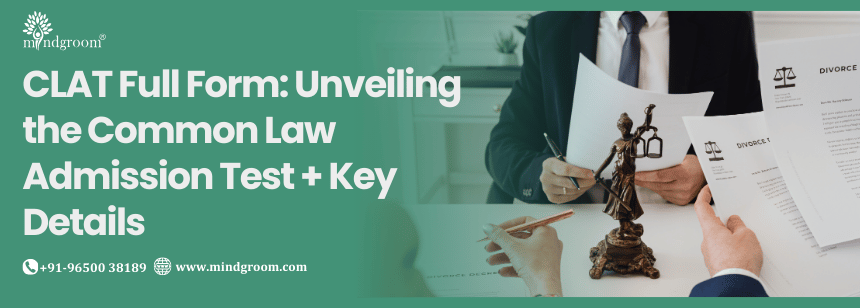
CLAT Full Form: Unveiling the Common Law Admission Test + Key Details
The journey into a prestigious legal career in India often begins with a single, crucial examination: the CLAT. For countless aspiring lawyers, understanding the nuances of this test is paramount to securing a coveted seat in one of the nation's top National Law Universities (NLUs). This article aims to demystify the Common Law Admission Test (CLAT), exploring its full form, significance, structure, and the pathways it unlocks, providing a comprehensive guide for prospective law students aiming for excellence in their legal education.
1 What is CLAT? The Common Law Admission Test Defined
CLAT, the Common Law Admission Test, is a standardized national-level entrance examination conducted annually for admission to undergraduate (UG) and postgraduate (PG) law programs offered by the 24 participating National Law Universities (NLUs) across India, and several other private law schools. It serves as the sole gateway for students seeking to enter these esteemed institutions and embark on a journey in legal education. The test is designed to assess a candidate's aptitude for legal studies through a multi-faceted evaluation of their comprehension, reasoning, and general awareness skills.
2 Why CLAT Matters: Gateway to Elite Legal Education in India
The significance of CLAT cannot be overstated. It is the primary criterion for securing admission into the prestigious National Law Universities (NLUs), which are renowned for their rigorous academic standards, experienced faculty, and excellent placement records. These NLUs are considered the apex institutions for legal education in India, producing some of the country's most influential legal minds. A degree from an NLU, facilitated by a strong CLAT performance, opens doors to lucrative career opportunities in corporate law, litigation, judiciary, academia, and policy-making. The overall attendance rate for CLAT 2025 was 96.33%, highlighting the exam's critical importance to aspirants [Physics Wallah, 2025; Toprankers, 2024]. Approximately 88,657 candidates appeared for CLAT 2026, underscoring the sustained high level of interest in this examination [Law, 2025].
3 The CLAT Ecosystem: An Overview of Legal Education Landscape
The CLAT operates within a well-established ecosystem centered around the National Law University system in India. This system, comprising 24 NLUs (as of recent counts), is a testament to India's commitment to elevating legal education. These universities aim to provide specialized, high-quality legal training distinct from traditional university law departments. The Consortium of National Law Universities plays a pivotal role in governing the CLAT, ensuring uniformity and maintaining academic integrity across member institutions. This collective effort standardizes admission processes and curriculum, fostering a competitive yet cooperative environment for legal studies.
Understanding the Governing Body: The Consortium of National Law Universities
The smooth and equitable conduct of the Common Law Admission Test (CLAT) is orchestrated by a central governing body, the Consortium of National Law Universities. This body is instrumental in maintaining the integrity and fairness of the entire admission process for law aspirants across India.
1 Role and Function of the Consortium of NLUs
The Consortium of National Law Universities is an academic institution established by the participating National Law Universities (NLUs). Its primary mandate is to coordinate and conduct CLAT, ensuring a fair and transparent admission process for both undergraduate (UG) and postgraduate (PG) law programs. This includes setting the exam date, finalizing the syllabus, designing the exam pattern, releasing notifications, and overseeing the counseling and seat allocation procedures. By pooling resources and expertise, the Consortium aims to create a unified platform that simplifies the admission process for students and upholds the standards of legal education offered by its member institutions.
2 Maintaining Standards and Coordination in Legal Education
Beyond its role in conducting CLAT, the Consortium of NLUs is dedicated to the advancement of legal education in India. It actively works towards standardizing academic curricula, promoting research, and enhancing the overall quality of teaching and learning across all participating NLUs. Through regular deliberations and collaborative initiatives, the Consortium ensures that the education imparted by member universities remains relevant, progressive, and aligned with global legal standards. This coordination is vital in maintaining the reputation and excellence associated with NLUs as premier institutions for legal education.
CLAT Eligibility Criteria: Are You Ready to Apply?
Aspiring candidates must carefully review the eligibility criteria for CLAT to ensure they meet the requirements for admission. These criteria are divided into undergraduate (UG) and postgraduate (PG) programs, with specific provisions for nationality.
1 Eligibility for CLAT UG (Undergraduate Courses)
For CLAT UG, candidates must have passed or be appearing for their 10+2 examination or an equivalent qualification from a recognized board. A minimum aggregate percentage is required, though this may vary slightly year-on-year and between category reservations. Generally, candidates need to secure a specific percentage of marks in their qualifying examination. The eligibility criteria are designed to ensure that students entering legal education at the undergraduate level possess a foundational academic background.
2 Eligibility for CLAT PG (Postgraduate Courses)
Candidates seeking admission to CLAT PG (LLM programs) must hold an LL.B. degree or an equivalent qualification from a university recognized by the Bar Council of India. Similar to the UG program, a minimum aggregate percentage in the LL.B. degree is mandated. The eligibility criteria for CLAT PG are set to ensure that candidates possess the necessary legal knowledge and academic rigor to undertake advanced legal studies and research at the postgraduate level within the National Law University system.
3 Important Notes on Nationality and NRI Sponsored Seats
CLAT is open to Indian nationals. However, the Consortium also has provisions for NRI (Non-Resident Indian) sponsored seats in some participating NLUs. Candidates applying under the NRI category need to meet specific documentation requirements and often have separate admission criteria or quotas. It is crucial for all applicants to thoroughly check the official CLAT notification for detailed guidelines regarding nationality and NRI sponsorships, as these regulations can be subject to change.
CLAT Exam Pattern: Structure and Format
Understanding the CLAT exam pattern is fundamental for effective preparation. The test is meticulously designed to assess candidates' analytical, critical thinking, and comprehension skills. Approximately 57% of candidates appearing for CLAT 2024 were female, continuing a trend of increasing female participation [The Times of India, 2023].
1 Examination Mode: Pen-and-Paper (Offline Mode)
CLAT is conducted in an offline, pen-and-paper-based (OMR) format. Candidates are required to mark their answers on an optical mark recognition (OMR) sheet using a blue or black ballpoint pen. This mode necessitates careful attention to detail and efficient time management.
2 Total Marks and Number of Questions
For both CLAT UG and CLAT PG, the examination consists of 120 multiple-choice questions (MCQs). Each question carries one mark, making the total marks for the examination 120. The CLAT 2025 topper scored 103.5 out of 120, illustrating the competitive scoring range [Collegedunia, 2026; EducationTimes.com, 2024].
3 Marking Scheme: Positive and Negative Marking
The marking scheme for CLAT involves a positive marking system for correct answers and a penalty for incorrect responses. Candidates are awarded +1 mark for each correct answer. However, for every incorrect answer, 0.25 marks are deducted. There is no negative marking for unattempted questions. This scheme emphasizes accuracy and strategic guessing.
4 Duration of the Examination
The total duration for the CLAT examination, for both UG and PG levels, is 2 hours (120 minutes). Candidates must manage their time effectively to attempt all sections within this stipulated period.
5 Sectional Breakdown for CLAT UG
CLAT UG is divided into five sections:
- English Language: Tests comprehension, vocabulary, and grammar.
- Current Affairs & General Knowledge: Assesses awareness of national and international events and static GK.
- Legal Reasoning: Evaluates understanding and application of legal principles.
- Logical Reasoning: Measures analytical and critical thinking skills.
- Quantitative Techniques: Covers elementary mathematics and data interpretation.
General category candidates comprised 62.60% of CLAT 2025 participants, indicating a competitive landscape for this segment [Law, 2025].
6 Sectional Breakdown for CLAT PG (Master of Laws)
CLAT PG focuses on assessing advanced legal knowledge. It typically comprises one section testing comprehension and critical reasoning skills applied to legal texts. The questions are based on passages drawn from various legal subjects, requiring candidates to demonstrate their understanding of jurisprudence, constitutional law, and other core legal domains.
CLAT Syllabus: Topics to Master for UG and PG
A thorough understanding of the CLAT syllabus is crucial for structured preparation. The syllabus is designed to evaluate a candidate's aptitude for legal education across various domains.
1 CLAT UG Syllabus Deep Dive
The CLAT UG syllabus is comprehensive, aiming to gauge a wide range of skills. The English section tests reading comprehension, grammar, vocabulary, and sentence structure. Current Affairs & General Knowledge requires candidates to stay updated on national and international events, historical facts, and important socio-economic and legal developments. Legal Reasoning assesses the ability to identify legal principles from passages and apply them to factual scenarios, akin to case studies. Logical Reasoning challenges candidates to analyze arguments, identify assumptions, and draw inferences. Quantitative Techniques covers basic arithmetic, algebra, statistics, and data interpretation, often presented through charts and graphs.
2 CLAT PG Syllabus Overview
The CLAT PG syllabus delves deeper into core legal education subjects. It typically includes topics from Jurisprudence, Constitutional Law, Contract Law, Tort Law, Criminal Law, International Law, and other relevant areas of law. The exam structure for PG emphasizes critical reading and analytical skills, often presenting passages from judgments, statutes, or legal texts for candidates to analyze and respond to questions based on them. This section tests a candidate's foundational understanding of legal theory and practice.
The CLAT Application Process: Step-by-Step Guide
The CLAT application process is a crucial step for any aspirant aiming for admission to National Law Universities (NLUs). It is conducted entirely online and requires careful attention to detail and adherence to timelines. Upcoming cycles like CLAT 2026 and CLAT 2027 will follow a similar procedure.
1 Online Registration and Application Form Submission
The process begins with online registration on the official CLAT Consortium website. Candidates must create an account by providing basic details such as name, email ID, and mobile number. Following registration, they need to complete the application form, which involves entering personal information, academic qualifications, and preferred test center locations.
2 Required Documents for Application (e.g., academic certificates, photographs, signatures)
Applicants must upload scanned copies of various documents. These typically include a recent passport-sized photograph, the candidate's signature, Class 10 and Class 12 mark sheets (or equivalent), and caste certificates for reserved categories. For CLAT PG, LL.B. mark sheets and degree certificates are also required. Ensuring the documents meet the specified dimensions and formats is essential for successful submission.
3 Application Fee Structure and Payment Methods
A non-refundable application fee is payable at the time of submitting the form. The fee structure usually varies for different categories (General, SC/ST, etc.). Payment can typically be made through various online methods, including credit cards, debit cards, and net banking. It is advisable to complete the payment process well before the deadline.
4 Admit Card Download and Verification
Once the application is accepted and verified, the CLAT admit card is released online. Candidates must download their admit cards, which contain essential details like the exam date, time, venue, and candidate's roll number. It is mandatory to carry the admit card along with a valid photo ID to the examination center on the day of the test.
5 Important Dates and Application Timeline (e.g., CLAT 2026, CLAT 2027 notifications)
The Consortium announces the CLAT application timeline, including the commencement and closing dates for registration, correction windows, and admit card releases. Aspirants should regularly check the official CLAT website for the latest updates, especially concerning CLAT 2026 and CLAT 2027 notifications, to avoid missing any critical deadlines.
Participating National Law Universities (NLUs) Through CLAT
CLAT serves as the unified gateway for admission to a network of prestigious National Law Universities (NLUs) across India. These institutions are highly sought after for their comprehensive legal education programs.
1 List of Prominent NLUs Accepting CLAT Scores
CLAT scores are accepted by all 24 National Law Universities in India, including highly reputed ones like:
- National Law School of India University (NLSIU), Bangalore
- NALSAR University of Law, Hyderabad
- National Law University, Jodhpur
- National Law Institute University (NLIU), Bhopal
- Gujarat National Law University (GNLU), Gandhinagar
- National Law University, Delhi (NLUD) - Note: NLUD conducts its own entrance exam, AILET, for UG admissions but accepts CLAT for PG admissions.
- Maharashtra National Law University (MNLU), Mumbai
- Maharashtra National Law University (MNLU), Nagpur
In 2025, NLSIU Bangalore, considered the best NLU in India, requires a score of 98+ for admission [Law Prep Tutorial, 2025; Careers360, 2025]. The presence of these esteemed institutions underscores CLAT's role in shaping the future of legal education in the country.
Effective Preparation Strategy
A well-defined preparation strategy is key to cracking CLAT and securing admission into a top National Law University. This involves understanding the syllabus, exam pattern, and honing specific skills.
1 Mastering the Syllabus and Exam Pattern
The first step is to thoroughly study the CLAT syllabus and understand the weightage of each section. Familiarity with the exam pattern, including the marking scheme and time constraints, is equally important. Candidates should create a realistic study schedule that allocates sufficient time to each subject.
2 Developing Core Competencies
- English Language: Regular reading of newspapers, magazines, and literature can improve comprehension and vocabulary. Practice grammar exercises and essay writing.
- Current Affairs & General Knowledge: Stay updated with daily news from reputable sources. Focus on national and international events, legal developments, and historical facts relevant to the syllabus.
- Legal Reasoning: Develop an understanding of basic legal principles by studying sample cases and legal maxims. Practice applying these principles to hypothetical situations.
- Logical Reasoning: Work on puzzles, critical thinking exercises, and analytical problems. Focus on identifying assumptions, arguments, and conclusions.
- Quantitative Techniques: Brush up on elementary mathematics concepts and practice data interpretation.
3 Utilizing Mock Tests and Past Papers
Taking regular mock tests is indispensable for gauging preparation levels, identifying weak areas, and improving time management. Analyzing performance after each mock test helps in refining the study approach. Solving previous years' question papers (PYPs) provides valuable insights into the exam's difficulty level and the types of questions asked.
Conclusion
The Common Law Admission Test (CLAT) stands as the definitive gateway to a distinguished career in law, offering aspiring legal professionals admission to India's esteemed National Law Universities (NLUs). Its comprehensive structure, designed to assess critical thinking, analytical abilities, and general awareness, ensures that only the most prepared candidates embark on this rigorous legal education journey. With approximately 88,657 candidates appearing for CLAT 2026, the exam continues to attract a large pool of talent, underscoring its enduring significance [Law, 2025]. The male-female ratio for CLAT 2026, approximately 0.72:1, reflects the evolving gender dynamics among test-takers [IMS, 2025; Law, 2025]. As the CLAT evolves, so too must the preparation strategies of its aspirants, focusing on deep understanding rather than rote memorization. Mastering the syllabus, practicing diligently with mock tests, and staying abreast of current affairs are crucial steps. Ultimately, CLAT is more than just an entrance exam; it is the first strategic move towards a future shaped by intellectual rigor and a profound commitment to justice, leading to quality legal education and impactful careers within the National Law University ecosystem and beyond.
Frequently Asked Question’s (FAQ’s)
CLAT full form is Common Law Admission Test.
CLAT exam is conducted for admission into undergraduate and postgraduate law programs at National Law Universities in India.
Candidates must pass 10+2 for UG CLAT and a law degree for PG CLAT, meeting minimum percentage requirements.
There is no upper age limit for CLAT as per the latest guidelines.
The CLAT exam is conducted for a total of 120 marks.
Looking For Job Satisfaction on the long run?
Please feel free to contact our experts
Call to ask any question
+91-9319336222Monday to Saturday
(9:00 AM to 8:00 PM)Resent Blogs

10 Things to Do During an Interview to Impress Your Future Employer
Learn More
Crafting Your Personal Narrative: A Guide to Writing About Yourself
Learn More
Top 10 Essential Interview Questions and Expert Answers for 2025
Learn More
Ace Your Next Interview: Essential Questions and Expert Answers for 2025
Learn More
First-Time Manager Interview: Crucial Questions and Strategies for Success
Learn More
150 Essential General Knowledge Questions for Interviews in 2025
Learn More
Master the Google Interview: Strategies for Success in 2025
Learn More
How Can You Describe Yourself Professionally? 5 Key Strategies You Need to Know
Learn More
Mastering the Art of How to Take Interview: Essential Techniques for Success
Learn More
25 Essential HR Interview Questions and Answers PDF You Can't Ignore
Learn More
7 Tips to Ace Your HR Screening Round and Land Your Dream Job
Learn More
10 Essential Tips for Acing Your Interview Exam
Learn More
5 Unique Interview Format Examples to Stand Out in Your Next Interview
Learn More
5 Powerful Techniques for a Memorable Interview Introduction
Learn More
Master Your Next Interview with These Top Interview Preparation Apps
Learn More
Mastering the Art: Top Interview Questions for 12th Class Students
Learn More
7 Must-Know Interview Questions for Freshers to Ace Your Job Hunt
Learn More
Mastering Interview Questions for HR Position with Answers: Strategies for Success
Learn More
12 Essential Interview Questions for Recruiter Position You Should Prepare For
Learn More
10 Must-Know Interview Questions UK Employers Love to Ask
Learn More
10 Creative Interview Writing Examples to Spark Your Imagination
Learn More
15 Essential Managerial Interview Questions for Freshers to Prepare
Learn More
15 Unique Marketing Interview Questions You Haven't Prepared For
Learn More
7 Key Strategies for a Successful Mock Interview Session
Learn More
The Ultimate Guide to Model Interview Questions: What You Need to Know
Learn More
5 My Self Question Exercises to Unlock Your True Potential
Learn More
10 Normal Questions That Can Spark Deep Conversations
Learn More
15 Essential Personal Interview Questions for Freshers to Ace Your Next Job
Learn More
10 Essential Phone Interview Questions You Can’t Afford to Ignore
Learn More
15 Essential Sales Interview Questions and Answers for Freshers
Learn More
7 Key Situational Interview Questions Every Employer Should Ask
Learn More
15 Essential Software Developer HR Interview Questions You Need to Prepare For
Learn More
Mastering the Technical Interview: Essential Questions and Answers
Learn More
Top Strategies for Responding to Tell Me About Yourself in a Student Interview
Learn More
Top 10 Interview Questions and Expert Answers
Learn More
Mastering the Art of Interviewing: 50 Tough Questions and Smart Answers
Learn More
How to Ace Your Next Mock Interview: Tips and Strategies for Success
Learn More
Your Ultimate Guide: 60 Insightful Questions to Ask Interviewers
Learn More
Crafting the Perfect Response to Why Do You Want This Job?
Learn More
Unique Ways to Tackle the Question Why Should We Hire You?
Learn More
Why Should We Hire You? - Top 10 Answers for Customer Service Roles
Learn More
Mastering the Art of Discussing Work Experience in Interviews
Learn More
Mastering Your Sales Interview: 50 Essential Questions and Answers
Learn More
Career Paths After 12th Commerce: Your Future Starts Here
Learn More
Explore One-Year Courses After 12th for Non-Medical Students
Learn More
Quick Career Paths: 2-Year Degree Courses After 12th for Fast-Track Success
Learn More
Comprehensive Guide: Courses After 12th Commerce
Learn More
Top 10 Lucrative Courses to Consider After Completing Engineering
Learn More
Advancing Your Career: Top Choices After B.Tech in 2025
Learn More
Explore Your Future: After CET Exam Which Course is Best for Aspiring Professionals?
Learn More
5 Reasons Why After Inter CEC, Choosing the Right Course is Crucial
Learn More
After PUC Which Course is Best for Aspiring Engineers? Explore Your Options!
Learn More
Unlocking Your Future: Best Arts and Science Courses After 12th for 2025
Learn More
Why a Bachelor Degree in Commerce is Your Pathway to Success
Learn More
15 Best Career Courses to Boost Your Earning Potential in 2025
Learn More
Emerging Career Fields for 2025: What You Need to Know
Learn More
Exploring In-Demand Career Paths After 12th: Science, Arts, Commerce
Learn More
15 Lucrative Science Careers You Should Consider
Learn More
High-Paying Career Paths for Girls After 12th Commerce
Learn More
Top 10 High Salary Career Courses After 12th Biology
Learn More
Top 10 High-Paying BSc Specializations for 2025
Learn More
Exploring the Future: Innovative Career Paths for B.Tech Graduates in 2025
Learn More
Comprehensive Guide to B.Tech Specializations for MPC Graduates
Learn More
Unlocking Your Potential: The Ultimate B Tech Job List for 2025
Learn More
B.Tech Salary Insights: How Much Can You Earn Per Month?
Learn More
Essential Business Courses After 12th: Your Guide to a Successful Career
Learn More
How Commerce Students Can Transition to BSc IT
Learn More
Exploring Career Paths After 12th: Your Guide to Success in 2025
Learn More
Certainly! Here are 10 additional title ideas inspired by the list you provided
Learn More
Exploring Career Paths After Engineering: Your Guide to the Future
Learn More
The Ultimate Guide to Career Options Post-High School Graduation
Learn More
Discover the Top 10 Chemistry Courses After 12th That Lead to High-Paying Jobs
Learn More
Explore the Best Diploma and Certificate Programs After 12th Commerce
Learn More
Career Paths for Computer Science Graduates: Top Opportunities to Explore
Learn More
Explore Top Courses After 12th: Your Path in Science, Arts, or Commerce
Learn More
Top 10 Courses After 12th Commerce for a Successful Career
Learn More
Top Paying Professional Courses After 12th for Commerce Students
Learn More
Emerging Career Paths After 12th Commerce Without Maths
Learn More
Exploring Career Paths After 12th Science: A Complete Guide
Learn More
Comprehensive Guide to Courses and Career Paths after 12th Grade
Learn More
Emerging Career Paths in India: What to Expect in 2025
Learn More
Top Diploma Paths for Students After Completing 12th Science
Learn More
Top 15 Easiest High-Paying Jobs to Pursue in India by 2025
Learn More
Navigating Your Future: Easy Degree Options After 12th
Learn More
Exploring Top Engineering Branches After 12th: A Comprehensive Guide
Learn More
Exploring Advanced Studies: Top Entrance Exams for Engineering Graduates
Learn More
MBA Salary Insights: Top Packages and Compensation Trends in India
Learn More
Top 15 Lucrative Careers in India for 2025
Learn More
Top 10 High-Paying Jobs for Commerce Graduates Without Maths
Learn More
Top 10 High Salary Courses After 12th PCB for Future Success
Learn More
High-Earning Courses to Pursue After 12th Science in 2025
Learn More
High Paying Career Paths for BiPC Students: Top 10 Courses to Consider
Learn More
Exploring High-Paying Engineering Degrees for the Future
Learn More
Exploring Integrated Courses After 12th: A Comprehensive Guide for Students
Learn More
Exploring Career Prospects: What Can You Do with a BBA Degree?
Learn More
Top 15 In-Demand Professional Courses for Commerce Graduates in 2025
Learn More
Exploring Lucrative Job Paths for BBA Graduates in 2025
Learn More
MBA Full Form Explained: Master of Business Administration & Its Strategic Career Value
Learn More
BBA Full Form: The Definitive Guide to BBA Degrees, Admissions, & Career Paths
Learn More
BCA Full Form Explained: Your Complete Guide to the Degree, Admission & Career Scope
Learn More
IAS Full Form: Indian Administrative Service Explained & Its Pivotal Role
Learn More
MBBS Full Form: Unraveling the Meaning Behind a Doctors Qualification
Learn More
UPSC Full Form: Union Public Service Commission and Its Vital Role
Learn More
BSc Full Form: Bachelor of Science & What It Means for Your Future
Learn More
ITI Full Form: What Exactly is Industrial Training Institute?
Learn More
LLB Full Form: Your Ultimate Guide to Bachelor of Laws, Eligibility & Career Scope
Learn More
Is There a True Computer Full Form? Unpacking the Popular Acronym
Learn More
B.Tech Full Form Unpacked: Meaning, Scope, and Why It Matters for Your Career
Learn More
IIT Full Form: Unveiling the Indian Institute of Technology and Its Legacy
Learn More
MCA Full Form Revealed: Master of Computer Applications & Its Significance
Learn More
IIT Full Form: Indian Institute of Technology – Understanding Its Legacy, Campuses, and Global Standing
Learn More
Your Complete Guide to Becoming a Veterinarian: Education, Specialties & Career Paths
Learn More
BSc Degree: Your Complete Guide to Courses, Careers, and Future Prospects
Learn More
B.Com Full Form Unveiled: What Bachelor of Commerce Truly Means
Learn More
BAMS Full Form: Bachelor of Ayurvedic Medicine and Surgery — Unpacking Its Meaning & Career Scope
Learn More
What is a Polytechnic? Your Complete Guide to Courses, Admissions & Career Paths
Learn More
SSC GD Constable Exam News 2025-26: Latest Updates on Vacancies, Dates & Application
Learn More
How to Choose the Best Veterinarian for Your Pet: A Comprehensive Guide
Learn More
Air Hostess 2026: Your Complete Roadmap to Landing the Dream Job
Learn More_Thumbnail_.png )
Unlocking Your Future: The Ultimate BSc Degree Guide (Courses, Careers & Admissions)
Learn More_Thumbnail_.png )
CMA Full Form: Certified Management Accountant (Global Standard Explained)
Learn More
NACH Full Form Explained: What It Is & Why It Matters in Banking
Learn More
The Modern Anthropologist: Understanding Their Role, Impact, and Diverse Specializations
Learn More
BBA: Your Ultimate Guide to Course Details, Admission, Fees, and Future Career Prospects
Learn More
BDS Full Form Unpacked: Your Essential Guide to Dentistry Courses, Admissions & Career Scope
Learn More
BHMS Full Form Revealed: Your Complete Guide to Bachelor of Homeopathic Medicine & Surgery
Learn More
B.Tech Admissions 2026: Your Complete Guide to Courses & Eligibility
Learn More
CFA Full Form: Understanding the Chartered Financial Analyst Designation
Learn More
Merchant Navy Salary in India: Unveiling Pay Scales by Rank & Experience
Learn More
TS EAMCET 2026: Official Notification, Exam Dates & Application Guide
Learn More
VITEEE 2026: Full Guide to Application, Dates, Syllabus & Preparation
Learn More
BMS Full Form: Unveiling Bachelor of Management Studies & What it Entails
Learn More
B.Sc. Computer Science: Your Complete Guide to Courses, Careers & Eligibility
Learn More
Computer Science Explained: From Basics to Advanced Concepts
Learn More
Worlds Most Difficult Exams: A Definitive Ranking for 2025
Learn More_All_You_Need_to_Know_Thumbnail_.png )
Union Public Service Commission (UPSC): All You Need to Know
Learn More
BE Full Form Explained: What Bachelor of Engineering Means & Your Career Path
Learn More
DMIT Full Form Revealed: Unpacking the Dermatoglyphic Multiple Intelligence Test
Learn More
Indias Most Difficult Exams: The Ultimate Ranking for 2025
Learn More
CLAT Full Form: Unveiling the Common Law Admission Test + Key Details
Learn More
Highest Paying Jobs in India: Unveiling the Top 25 Roles & Their Lucrative Salaries
Learn More
MA Full Form: Unpacking the Master of Arts Degree & What It Entails
Learn More
Marketing Management Explained: Core Concepts & Strategic Implementation
Learn More
BCA Course Subjects: A Comprehensive Guide to Your IT Degree Curriculum
Learn More
CAT Exam Date 2026: When to Apply & Exam Schedule Revealed
Learn More
CDS Full Form: Unveiling Combined Defence Services & Your Path to Commission
Learn More
Lab Technician Career Path: Duties, Skills, and Salary Guide
Learn More
Your Complete Guide to Becoming a Successful Software Developer
Learn More
Air Hostess Course Guide: Everything You Need to Know for Your Aviation Career
Learn More
Introduction: Navigating Your Path to Medical Excellence in India
Learn More
Top Commerce Courses After 12th: Unlock Lucrative Career Paths
Learn More
Top Industrial Training Institutes: Your Guide to Skilled Trades
Learn More
Understanding Psychometric Tests: Your Definitive Guide & Free Examples
Learn More
What Does a Surgeon Do? A Comprehensive Guide to the Profession
Learn More
UG Explained: Your Ultimate Guide to Undergraduate Degrees & Admissions
Learn More
10th Pass Govt Jobs 2026: Your Complete Guide to Apply & Secure Your Career
Learn More
ATMA: Your Complete Guide to the Management Admissions Test
Learn More
BHMS Course Guide: Eligibility, Syllabus, Career Prospects & Top Colleges
Learn More
Unlock Your Future: The Definitive Guide to Career Counselling
Learn More
What Does a Clinical Psychologist Do? Your Comprehensive Guide
Learn More_Thumbnail_.png )
M.Tech Full Form: Master of Technology Explained (Meaning, Scope & Benefits)
Learn More
Radiology Courses Explained: From Certificates to Masters Degrees
Learn More
BSc Courses Explained: Full Guide to Specializations, Admissions & Career Paths
Learn More
BSc Nursing Course: Admission Guide, Eligibility, Syllabus & Career Paths
Learn More
BA LLB Full Form Explained: Unpacking Bachelor of Arts & Bachelor of Laws
Learn More
Top BBA Colleges in India: Unveiling the Elite Institutions for Your Management Degree
Learn More
UPSC CDS Exam Date 2026: Complete Schedule & Notification Details
Learn More
Top Career-Focused Courses After 12th Grade: Unlock Your Future
Learn More
Explore the World of Humanities Subjects: A Comprehensive Guide
Learn More
IPU CET 2026: Complete Guide to Applications, Syllabus & Cutoffs
Learn More
ISI Full Form: Unveiling the Meaning & Importance of the Indian Standards Institute
Learn More
JEE Advanced 2026 Exam Date: When Will the Exam Be Held?
Learn More
JEE Main 2026 Result Date: When to Expect Session 1 & 2 Results
Learn More
MCA Course Guide: Everything You Need to Know About Eligibility, Fees, and Admissions
Learn More
Multimedia Explained: Your Complete Guide to Definition, Examples, and Impact
Learn More
The Ultimate Paramedical Courses List: Find Your Perfect Career Path
Learn More
Pharm.D. Program: Your Complete Guide to Curriculum, Admissions & Outcomes
Learn More
The Ultimate Guide to Top IIT Colleges in India: Ranking, Admissions, and Courses
Learn More
ATC Full Form: Unpacking Air Traffic Control, Anatomy & More
Learn More
B.Ed. Course Duration in India: Everything Aspiring Teachers Need to Know
Learn More
B.Sc Psychology Degree: Your Guide to Admissions, Curriculum & Career Paths
Learn More
B.Tech Computer Science: Your Complete Guide to Admission, Syllabus & Career Prospects
Learn More
BDS Course Duration: How Long is Bachelor of Dental Surgery?
Learn More
BFA Full Form Explained: What is a Bachelor of Fine Arts & Why it Matters
Learn More
Biology Explained: What It Is, Its Core Concepts & Why It Matters
Learn More
BPT Course: Your Complete Guide to Bachelor of Physiotherapy Admissions
Learn More
BSc Nursing Full Form: What it Means and Why it Matters
Learn More
The Science Complete Guide: Best Courses & Career Paths Revealed
Learn More
Master Your Future: Your Complete Guide to 2026 Government Exams & How to Prepare
Learn More
MPhil Explained: Your Complete Guide to the Master of Philosophy
Learn More
Become a Certified Stenographer: Your Complete Course Guide
Learn More
TANCET 2026: Complete Exam Guide - Dates, Syllabus, and Preparation Tips
Learn More
Upcoming Government Exams 2026: Full Schedule, Eligibility & Application Dates
Learn More
What is CA? The Complete Guide to Chartered Accountancy and Your Career Path
Learn More
Agnipath Scheme Explained: Eligibility, Benefits, Salary & Career Path
Learn More
AFCAT 2026: Your Complete Guide to the Air Force Common Admission Test
Learn More
B Pharm Course Duration: How Long Does it Really Take to Get Your Pharmacy Degree?
Learn More
Top Commerce Colleges in India: Your Ultimate Ranking & Admission Guide
Learn More
Top Arts Courses After 12th: Unlock Your Creative & Professional Future
Learn More
Diploma in Mechanical Engineering: Your Path to a Rewarding Career
Learn More_Thumbnail_.png )
Unlock Your Future: Top High-Paying Courses After 12th Science (PCM & PCB)
Learn More_Officer_Salary_In-depth_Breakdown_Perks_Thumbnail_.png )
Indian Foreign Service (IFS) Officer Salary: In-depth Breakdown & Perks
Learn More
M.Ed. Full Form: What Master of Education Means & Why It Matters
Learn More
Understanding India's Paramilitary Forces: Roles, Responsibilities, and Key Units
Learn More
RBI Assistant 2026: Full Details on Notification, Vacancies & Application Process
Learn More
Relationship Manager Salary, Duties, and Career Path Explained
Learn More
Unlocking Your Science Journey: A Complete Guide to Science Subjects
Learn More
Unlock Your Career: The Ultimate Guide to Vocational Courses and Training Programs
Learn More
Top Courses After 10th Grade: Your Guide to Future Careers & Salaries
Learn More
MP Police ASI Recruitment: Latest Notification, Eligibility & Application Guide
Learn More
B.Arch Admissions: Your Complete Guide to Eligibility, Exams & Top Colleges
Learn More
B.Com Honours Degree: Your Complete Guide to Admission & Career Prospects
Learn More
BA Psychology Degree: Your Guide to Programs, Careers & Admissions
Learn More
BBS Full Form Explained: Bachelor of Business Studies - Your Career Guide
Learn More
Biotech Engineering: Your Guide to Innovation in Life Sciences
Learn More
BPA Full Form: Unpacking Bisphenol A and Its Impact
Learn More
BSW Full Form: What Bachelor of Social Work Means and Why It Matters
Learn More
BVSc Full Form Explained: What Does Bachelor of Veterinary Science Mean?
Learn More
Become a Customs Officer: Your Complete Career Guide
Learn More
DCH Full Form in Medical: Understanding the Diploma in Child Health
Learn More
Top Diploma Courses After 10th: Your 2026 Career Guide
Learn More
Unlock Your Tech Career: The Ultimate Guide to a Diploma in Computer Science
Learn More
Your Step-by-Step Guide: How to Become a Software Engineer
Learn More
Indian Forest Service Salary: Unveiling the Full Pay Scale & Perks for IFS Officers
Learn More
JEECUP Admit Card 2026: Download Hall Ticket & Exam Day Guide
Learn More
Your Guide to Junior Colleges: Admissions, Programs & Best Choices
Learn More
Lateral Entry Admissions: Your Complete Guide to Second Year College Admissions
Learn More
Introduction: Elevating Your Pharmacy Career with a Master's Degree
Learn More
Introduction: Why the Master of Science is the Engine of the Modern Economy
Learn More
Introduction: The Journey to Becoming a Physician
Learn More
The Evolution of Network Engineering: Defining the 2026 Landscape
Learn More
Connet Us
Unlock Your Dream Career Potential - Get Expert Advice From Our Counselling Experts


